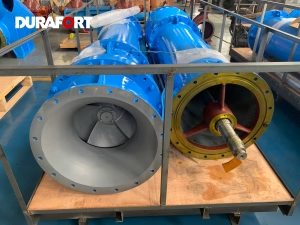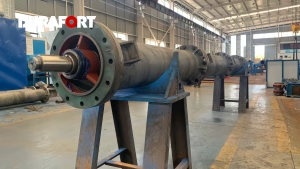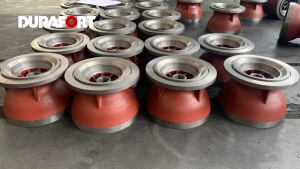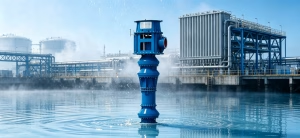
Unplanned downtime is the arch-nemesis of profitability and operational efficiency in thermal power generation. Every moment a turbine sits idle translates directly to lost revenue and increased costs. While many factors influence plant availability, the reliability of auxiliary systems is critical—and none is more vital than the industrial cooling water pump. This system is the lifeblood of a thermal power plant, and its failure can cascade into a complete shutdown . For plant managers and engineers, the choice of a large capacity vertical turbine pump isn’t just a procurement decision; it’s a strategic investment in operational resilience.
The Critical Cooling Water Challenge
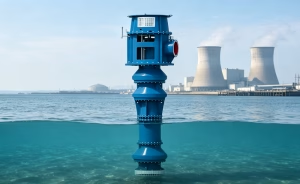
Thermal power plants, whether coal-fired, gas-based, or nuclear, require vast quantities of water for condensing steam and cooling critical equipment . The cooling water pump is responsible for moving this water from a source—be it a river, sea, cooling tower basin, or reservoir—to the plant’s heat exchangers and condensers.
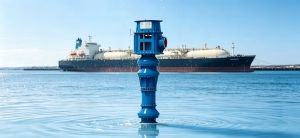
These pumps face immense challenges. They are subjected to continuous operation, often 24/7. They must handle fluctuating demands driven by tidal changes, seasonal temperature variations, and plant load adjustments . Furthermore, the water source itself can be highly corrosive. Seawater, brackish water, or water containing chlorides and abrasive particles can rapidly degrade standard materials like cast iron or 304 stainless steel .
A pump failure in this environment is a worst-case scenario. It forces a plant to reduce load or shut down entirely, often for days or weeks until repairs are made. The cost of this downtime, when factoring in lost generation and repair expenses, far outweighs the initial investment in a robust, reliable pumping solution.
The Power Plant Vertical Turbine Pump: An Overview
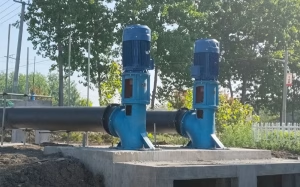
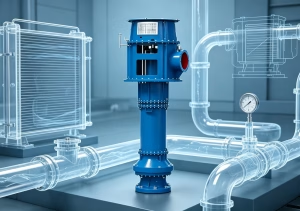
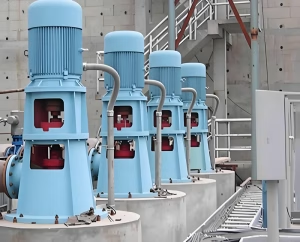
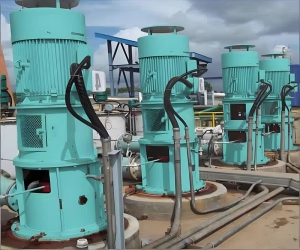
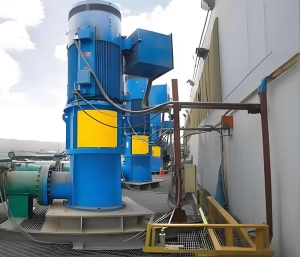
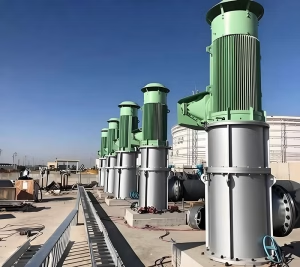
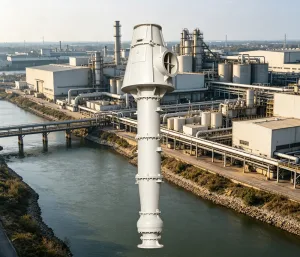
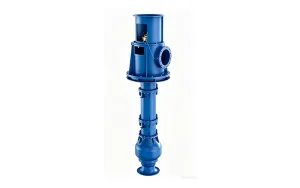
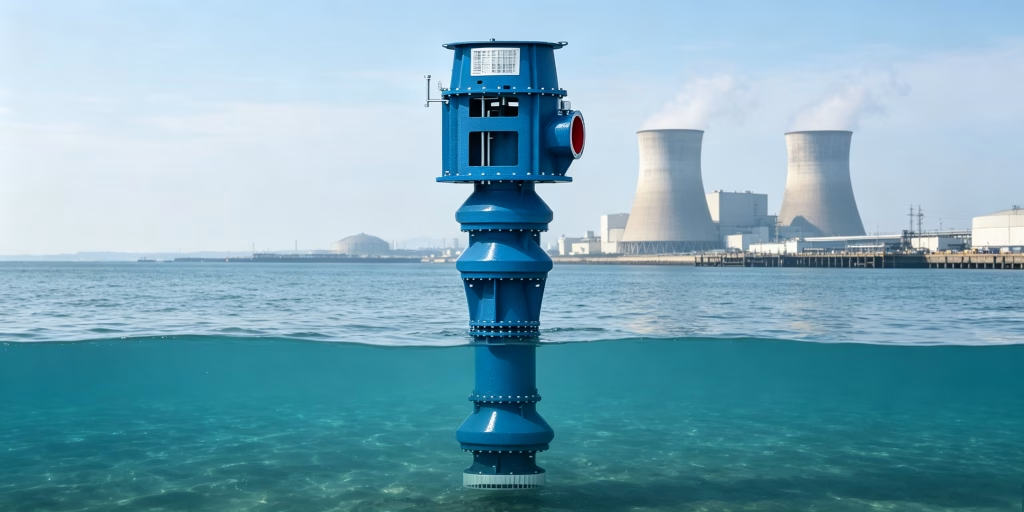
For these demanding applications, the vertical turbine pump has become an industry standard. As a high-head cooling pump, its design offers several inherent advantages for power plant cooling water applications:
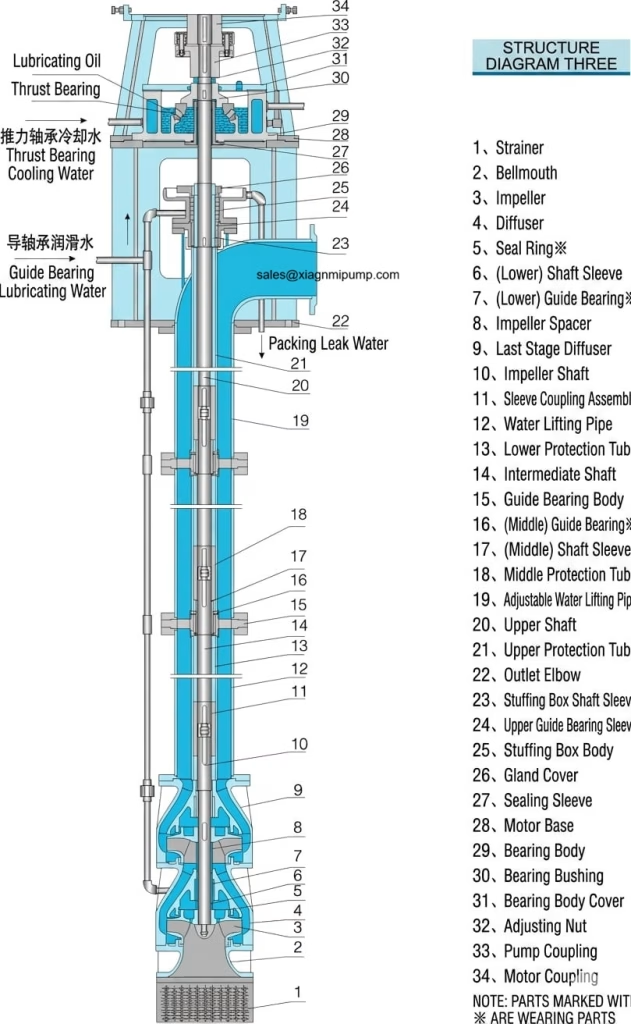
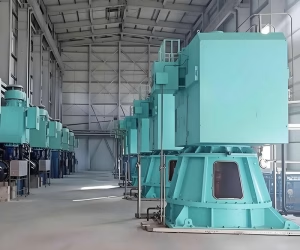
- Space Efficiency: The vertical configuration saves valuable floor space, with the pump bowl assembly submerged in the sump and the motor at ground level .
- Superior NPSH Characteristics: The submerged impeller provides excellent Net Positive Suction Head (NPSH) characteristics, which is critical for preventing cavitation that can damage the impeller .
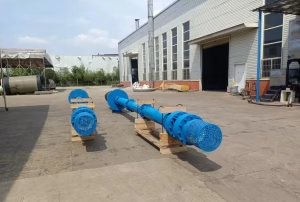
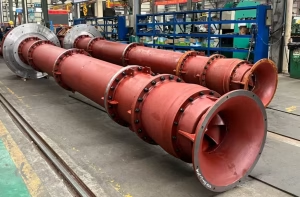
3.High Capacity and Head: Modern designs can achieve flows exceeding 70,000 m³/h and heads up to 150 meters or more, making them ideal for the massive water demands of a thermal power plant .
4.Operational Flexibility: Power plant conditions are rarely static. Large capacity vertical turbine pumps, like the LC series, can be equipped with VFDs or hydraulic impeller blade adjustment mechanisms to optimize efficiency and performance across varying duty points .
Material Science: The Key to Longevity in Corrosive Environments
The materials of construction are arguably the most critical factor determining the lifespan and reliability of an industrial cooling water pump. For a pump handling seawater or brine, standard materials are doomed to fail. This is where advanced metallurgy, specifically duplex and super duplex stainless steels, comes into play .
Duplex stainless steels like SS2205 and SS2507, and materials like CD4MCu and 904L, offer superior resistance to chloride-induced stress corrosion cracking (SCC) and pitting, which are the primary failure modes in marine environments .
For example, the LC vertical turbine pump from Hunan Durafort can be engineered with a range of these high-performance materials:
- Super Duplex SS2507: This is the premier choice for the most aggressive seawater applications, offering outstanding resistance to pitting, crevice corrosion, and SCC.
- Duplex SS2205: Provides excellent strength and corrosion resistance for moderately corrosive seawater and brackish water.
- SS316L & 904L: Offer robust resistance to a wide range of corrosive fluids and are often more cost-effective for less aggressive conditions.
- Titanium: For extreme chemical resistance, titanium can be specified.
The ability to tailor the material to the specific fluid composition is what separates a pump that fails within months from one that operates reliably for decades.
Investing in Uptime with the Right Vertical Turbine Pump
For thermal power plants, the cooling water system is non-negotiable. Its reliability is paramount to achieving high operational availability and economic performance. Selecting a vertical turbine pump for power plants isn’t just about meeting flow and head specifications; it’s about ensuring resilience against the harshest service conditions.
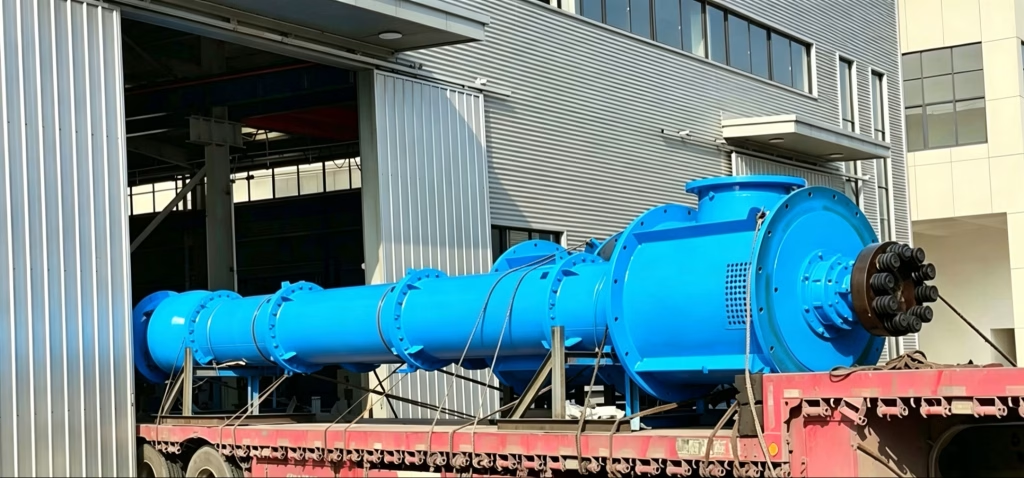
By choosing a pump engineered with the right materials, such as the duplex and super duplex stainless steel options available in the LC series, plant operators can mitigate the risk of failure, maximize uptime, and secure the profitability of their facility for years to come. Investing in a heavy-duty, large capacity vertical turbine pump is an investment in the very longevity and reliability of the plant itself.