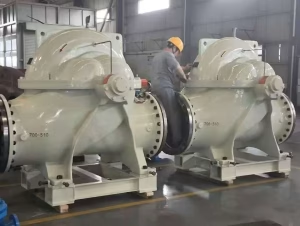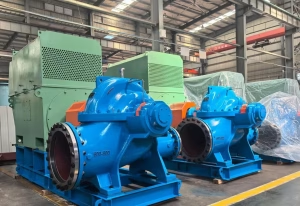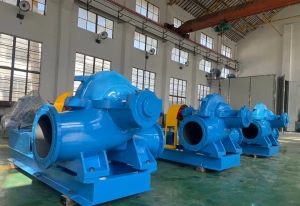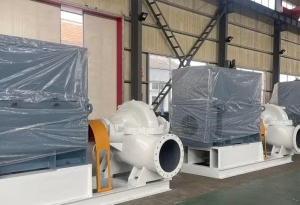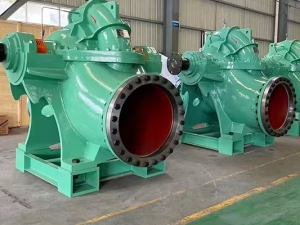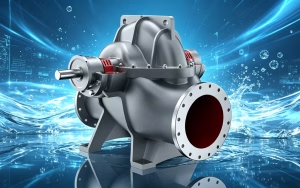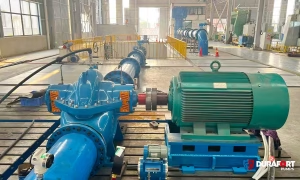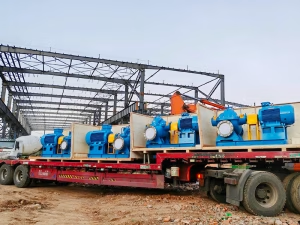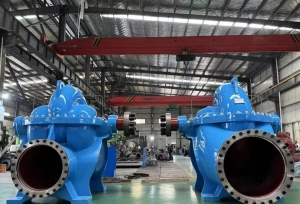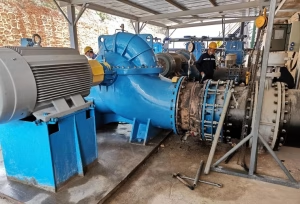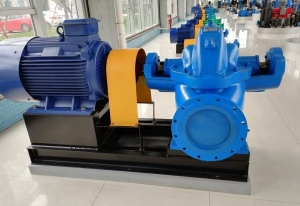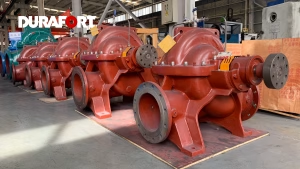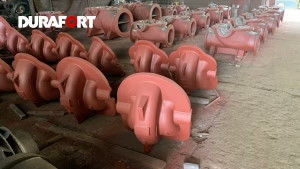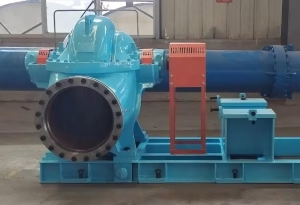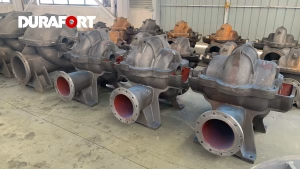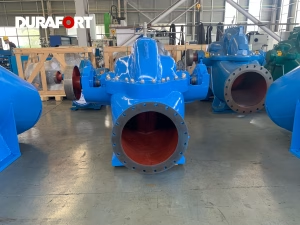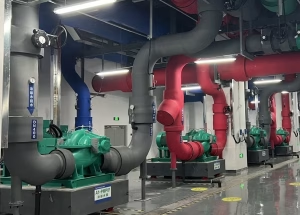
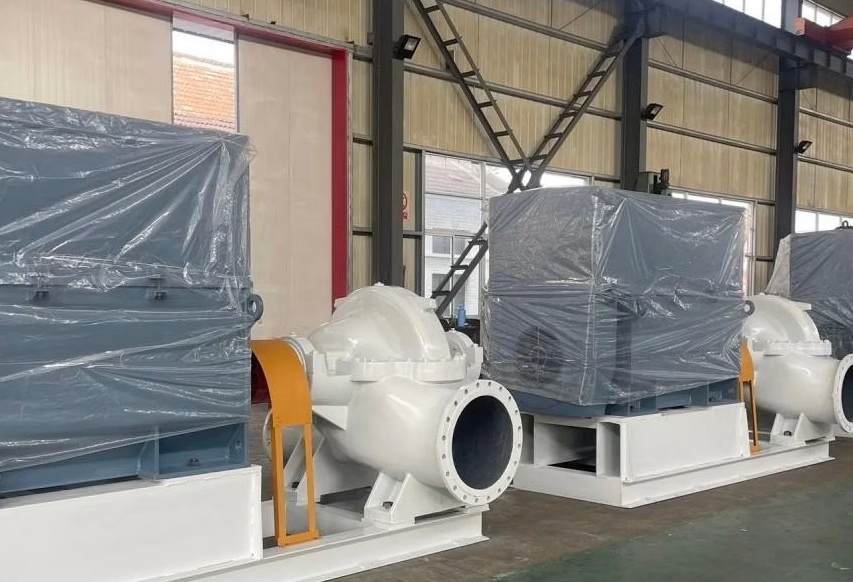
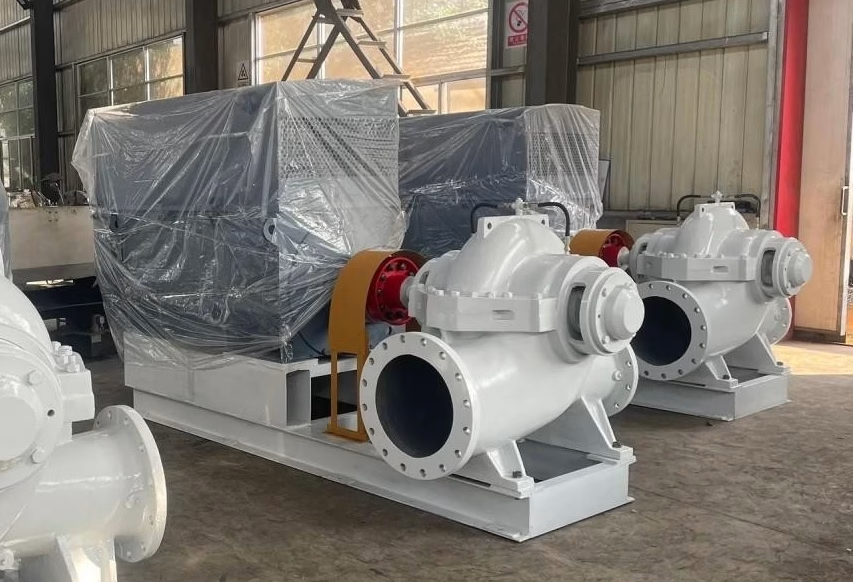
Moving petroleum crude, refined gasoline, or other hydrocarbon liquids requires a pump that delivers high flow, moderate head, and absolute leak integrity. The bomba de carcasa dividida (horizontally split, single-stage, double-suction design) is the preferred choice for pipeline transfer, tank farm operations, and refinery feed systems. Hunan Durafort Pumps Co., Ltd., a professional manufacturer in Hunan Province and South China, offers the Serie XSP – a third-generation, high-efficiency split case pump engineered for demanding applications. While the XSP excels in water and industrial services, it can be fully configured with carbon steel, 304/316L stainless steel, or super duplex alloys (SS2205, SS2507, 904L, CD4MCu) to safely handle petroleum products and gasoline.
With over 300 employees and an annual production capacity of 20,000 units, Durafort combines advanced hydraulics, robust construction, and global compliance. This post explains why the XSP split case pump is an excellent choice for petroleum and gasoline transfer.
Why Choose a Split Case Pump for Petroleum and Gasoline?
Petroleum and gasoline have unique challenges: low viscosity, high vapor pressure (especially gasoline), and flammability. A split case pump offers:
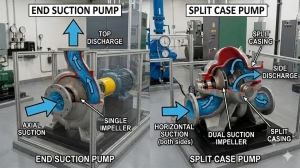
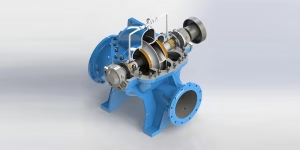
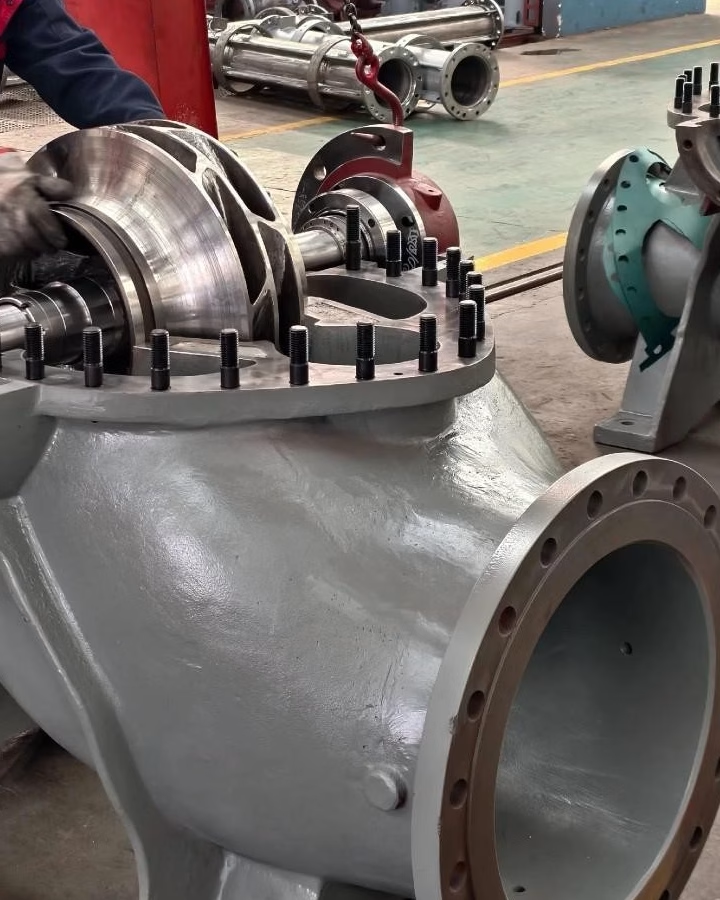
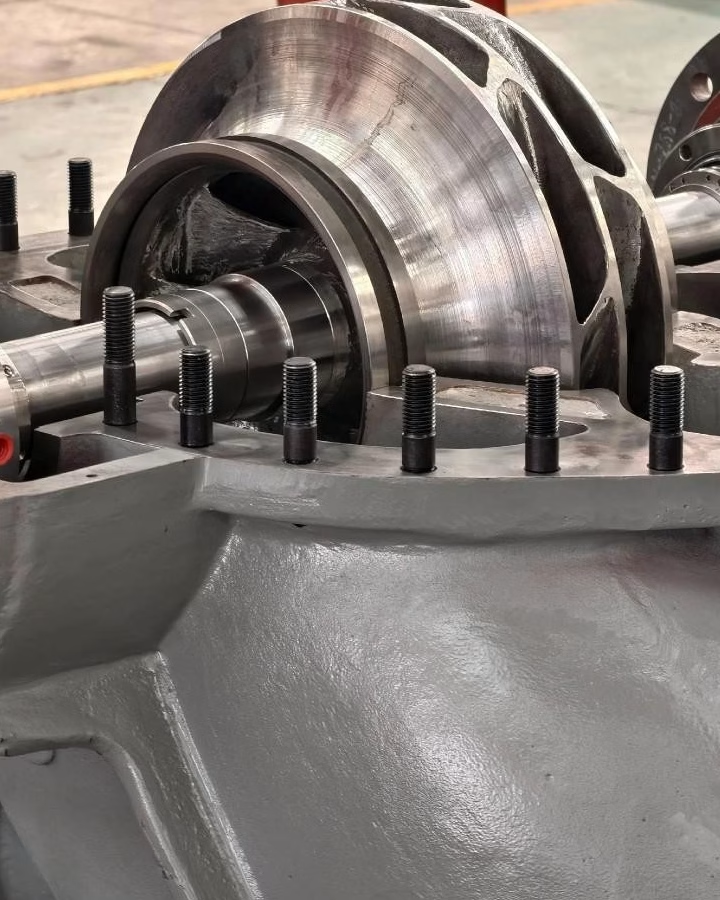
- Carcasa de división horizontal – Easy access to impeller and shaft without disconnecting piping, critical for maintenance in hazardous areas.
- Impulsor de doble succión – Hydraulically balanced, eliminating axial thrust and reducing bearing wear.
- Requisito de NPSH bajo – Essential for gasoline to prevent cavitation (vapor formation) and resultant seal/gasket failure.
- High efficiency across wide flow ranges – Energy savings in continuous pipeline or loading applications.
- Flexibilidad del material – From carbon steel for clean refined products to duplex stainless steel for sour crude or salty petroleum.
El Serie XSP is designed and manufactured to GB/T5657 (equivalent to ISO 5199) and meets GB19762 energy efficiency standards. With appropriate material upgrades, it becomes a reliable workhorse for the petroleum industry.
XSP Series – Technical Specifications (Petroleum & Gasoline Configuration)
| Parámetro | Rango |
|---|---|
| Velocidad | 370 – 2,970 r/min |
| Caudal | 135 – 38 000 m³/h |
| Cabeza | 12 – 205 m |
| Medium temperature (standard) | ≤80°C |
| Medium temperature (with cooling) | ≤150°C (QT500-7 casing or cast steel) |
| Max inlet pressure | ≤0.3 MPa (≤0.6 MPa with high-pressure casing) |
For petroleum and gasoline service, the standard cast iron casing is not acceptable. We recommend carbon steel (WCB) for clean products or 316L stainless steel for gasoline, ethanol blends, or corrosive crude. Super duplex (SS2207/SS2507) is available for sour or chloride-rich petroleum.
Material Selection Guide for Petroleum & Gasoline
Proper material selection is critical for safety and longevity. Hunan Durafort Pumps offers a full spectrum of metallurgies:
| Componente | Clean Refined Products (Diesel, Jet Fuel) | Gasoline (including ethanol blends) | Sour Crude / High H₂S | Seawater-Contaminated Petroleum |
|---|---|---|---|---|
| Carcasa | Carbon steel (WCB) | 304 or 316L | 316L or SS2205 | SS2507 / 904L |
| Impulsor | Acero al carbono | 304 or 316L | 316L or SS2205 | CD4MCu |
| Eje | 4140 steel (coated) | 316L | SS2205 | SS2507 |
| Llevar anillos | 304 stainless | 316L | SS2205 | CD4MCu |
| Mechanical seal faces | Carbon vs. SiC | SiC vs. SiC (low vapor pressure margin) | SiC vs. SiC with API Plan | Tungsten carbide |
| Seal elastomers | Viton® or NBR | Viton® (FKM) | FFKM (Kalrez®) | FFKM |
Gasoline note: Gasoline with ethanol (E10, E85) can corrode carbon steel and degrade certain elastomers. 316L stainless steel + Viton seals is the minimum recommended combination.
Key Design Features for Petroleum & Gasoline Transfer
1. Low NPSH Hydraulics
Gasoline has high Reid Vapor Pressure (RVP). The XSP’s double-suction impeller design significantly reduces NPSH required (as low as 2-3 meters), preventing cavitation that could lead to seal failure and leakage in hazardous areas.
2. Heavy-Duty Bearing Housing with Cooling
For continuous operation with warm petroleum (e.g., crude from storage tanks at 60-80°C), the XSP offers:
- Large oil-lubricated bearings with cooling fins
- Optional water-cooled bearing housings for temperatures above 80°C
- Bearing temperature monitoring (RTD probes available)
3. Leak-Free Shaft Sealing – API Options
We understand that leakage of petroleum or gasoline is unacceptable. Options include:
- Single cartridge mechanical seal with API Plan 11 (internal recirculation)
- Double mechanical seal with API Plan 52 (buffer fluid) for volatile gasoline
- Magnetic drive (canned pump variant) – zero dynamic leakage – available on request
All seal chambers are designed to API 682 standards, with proper venting and drain connections.
4. Fire-Safe Casing Design
The horizontally split casing uses high-strength studs and fire-safe gaskets (spiral-wound with graphite filler). Flanges are rated to PN16/PN25 (or ANSI 150/300) – suitable for typical petroleum pipeline pressures.
5. Explosion-Proof Motor & Accessories
We can supply the complete pump-motor set with:
- TEFC or flameproof (Ex d) motors (ATEX / IECEx certified)
- Explosion-proof junction boxes and transmitters
- Earthing/grounding connections on pump baseplate
Typical Applications – Split Case Pump for Petroleum & Gasoline
| Solicitud | Flow (m³/h) | Head (m) | Material recomendado |
|---|---|---|---|
| Gasoline loading rack (tank truck / railcar) | 300 – 1,200 | 40 – 90 | 316L + double seal + Viton |
| Crude oil pipeline booster station | 5,000 – 20,000 | 50 – 150 | Carbon steel (WCB) or 316L for sour |
| Refinery crude charge pump (pre-feed) | 2,000 – 8,000 | 80 – 180 | 316L or SS2205 (for high temperature) |
| Tank farm circulation / blending | 1,000 – 6,000 | 20 – 60 | Carbon steel (for diesel/fuel oil) or 304 |
| Aviation jet fuel (Jet A, JP-8) hydrant system | 500 – 2,000 | 100 – 150 | 316L + conductive seal (static discharge) |
| Petroleum products terminal (multi-product) | 800 – 4,000 | 60 – 120 | 316L (to handle gasoline, diesel, and kerosene interchangeably) |
All pumps are hydrostatically tested at 1.5x design pressure. Material test reports (MTRs) are provided for all wetted parts.
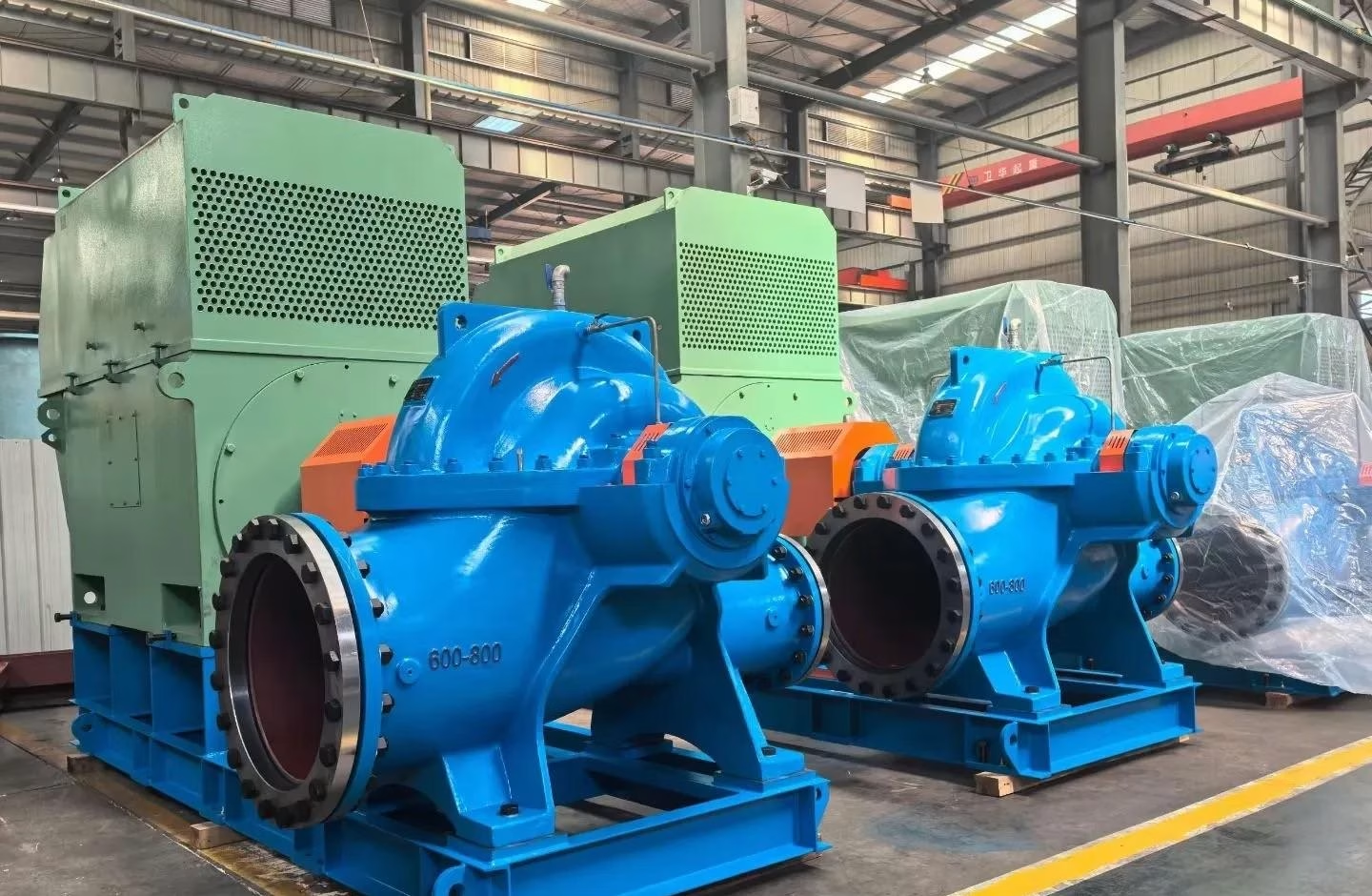
Why Hunan Durafort Pumps Is Your Ideal Supplier
- Proven manufacturing scale – 300+ employees, 20,000 units annually → short lead times and consistent quality.
- Regional leadership – One of the top pump manufacturers in Hunan Province and South China.
- Broad material capabilities – Cast iron, carbon steel, 304, 316L, SS2205, SS2507, 904L, CD4MCu – all under one roof.
- Engineering expertise – Our team can perform API 610 gap analysis, NPSH calculations, and select appropriate seal flush plans.
- International compliance – We can certify to ISO 5199, ANSI/HI, and provide ATEX/IECEx documentation upon request.
Comparison: Bomba de carcasa dividida XSP vs. Other Pump Types for Petroleum
| Tipo de bomba | Flow Range (m³/h) | Head Range (m) | Maintenance | Suitability for Gasoline |
|---|---|---|---|---|
| Carcasa dividida XSP | 135 – 38,000 | 12 – 205 | Easy (horizontal split) | Excellent (low NPSH, seal options) |
| Bomba de turbina vertical | 50 – 8,400 | 15 – 150 | Difficult (pull-out) | Good for tank suction, but seal access hard |
| End suction centrifugal | Up to 1,500 | Up to 150 | Moderado | Acceptable for low flow, but higher NPSH |
| Screw pump (positive displacement) | Up to 500 | Up to 100 | High (rotors wear) | Too costly for high flow |
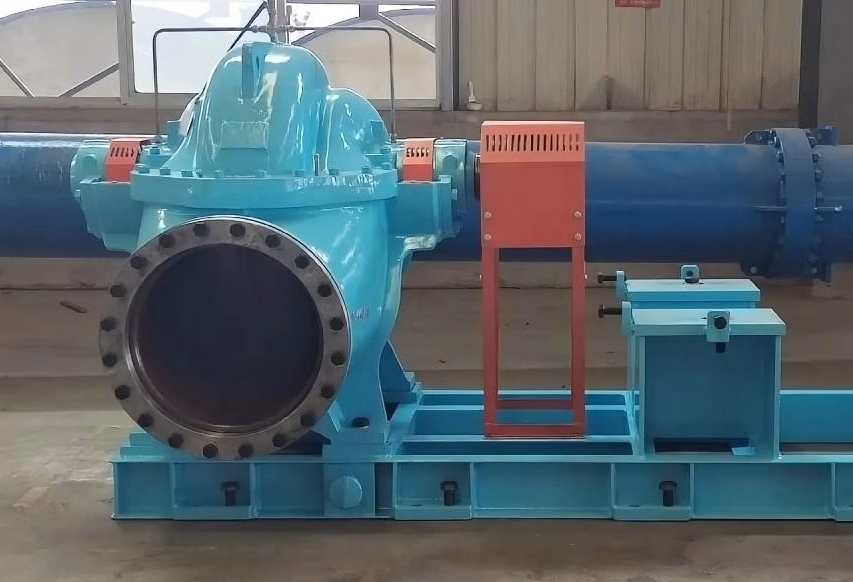
Para high-flow petroleum logistics (pipelines, terminals, refineries), the split case pump is the most economical and reliable choice.
Safety & Compliance Checklist for Petroleum & Gasoline Pumps
When specifying a split case pump for petroleum and gasoline, ensure:
- Material compatibility – No copper alloys (avoid bronze impellers in gasoline – risk of gum formation). Use stainless steel or carbon steel.
- Earthing continuity – Pump casing, baseplate, and piping must be electrically bonded.
- Seal leak detection – Install a pressure switch or conductivity sensor on the seal drain port.
- Casing pressure rating – For pipeline applications with surge, specify higher class (PN25 or ANSI 300).
- Ventilation – For indoor installations, ensure the pump area is classified (Zone 1 or Zone 2) and use appropriate motor.
Hunan Durafort Pumps provides full documentation including:
- Hydrostatic test certificate
- Material certifications (EN 10204 3.1)
- Performance curve (Q-H, efficiency, NPSHr)
- Dimensional general arrangement drawing
- Recommended spare parts list
Maintenance Best Practices
- Inspect mechanical seals every 3-6 months – Petroleum can degrade O-rings. Replace Viton every 2 years.
- Check bearing lubricant – For oil-lubricated bearings, sample annually for contamination.
- Monitor casing temperature – Sudden hot spots may indicate internal rubbing or cavitation.
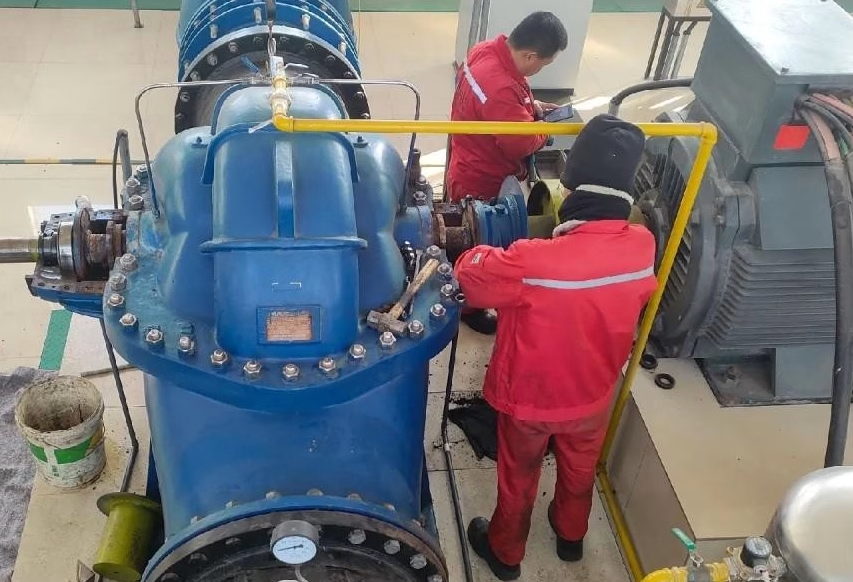
- Perform annual alignment check – Misalignment causes premature seal and bearing failure.
Durafort offers OEM spare parts kits including bearing assemblies, seal cartridges, gaskets, and wear rings with fast global shipping.
Contact Hunan Durafort Pumps for Your Petroleum & Gasoline Project
Our engineers are ready to size and quote the right split case pump for petroleum and gasoline based on your flow, head, temperature, and fluid composition. We support custom alloy builds, API seal plans, and explosion-proof motor packages.
- Correo electrónico: sales@deyangforge.com (replace with actual)
- Sitio web: deyangforge.com
- Factory location: Hunan Province, China (OEM and ODM welcome)
Request a technical consultation today – mention “Split case pump for petroleum and gasoline” for priority engineering support and a detailed corrosion material recommendation.
FAQ – Split Case Pump for Petroleum and Gasoline
Q: Can the XSP split case pump handle crude oil with sand or sediment?
A: Yes. Specify hardened wear rings (SS2205 or ceramic coating) and a mechanical seal with hard faces (tungsten carbide vs. silicon carbide). For high abrasion, we recommend a replaceable liner.
Q: Is the pump self-priming?
A: No. The split case pump is not self-priming. It must be installed with a flooded suction (liquid level above pump centerline). For above-ground tanks, install a foot valve or use a priming system.
Q: What’s the maximum viscosity this pump can handle?
A: The XSP is designed for low-viscosity liquids (< 300 cSt). For heavy crude (> 300 cSt), we recommend a positive displacement pump or a specially modified centrifugal pump with oversize motor – please consult our engineers.
Q: Do you provide ATEX-certified pumps?
A: Yes. We can supply the pump with ATEX II 2G Ex h IIB T4 certification (mechanical components) and pair with an Ex d motor. Full declaration of conformity provided.
Q: What is the typical lead time for a petroleum-grade split case pump?
A: Carbon steel casing with 316L impeller – 5-7 weeks. Super duplex (SS2507) – 10-12 weeks due to special casting and machining.
Q: Can I use the same pump for gasoline and diesel?
A: Yes, if constructed of 316L stainless steel with Viton seals. However, you must flush the pump between product changes if strict purity is required (e.g., for aviation fuel).
Hunan Durafort Pumps – Delivering flow solutions for the world’s energy needs.