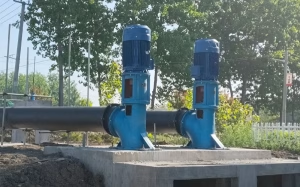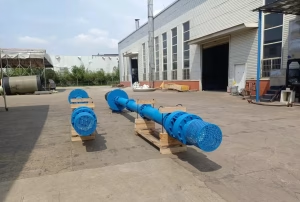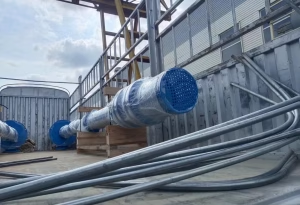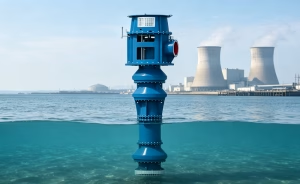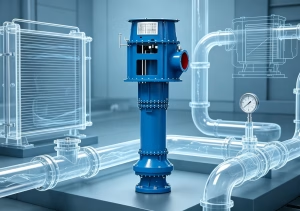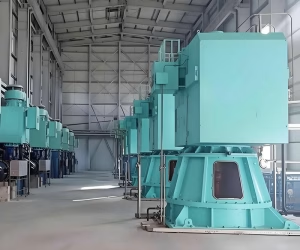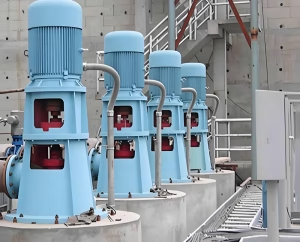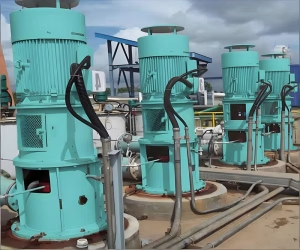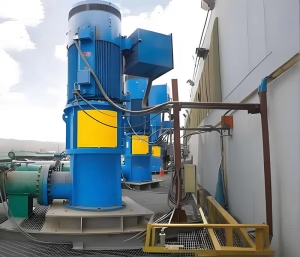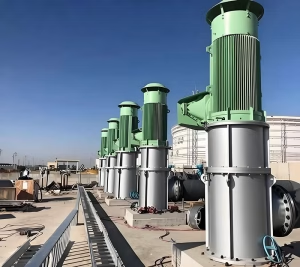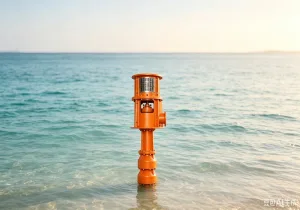
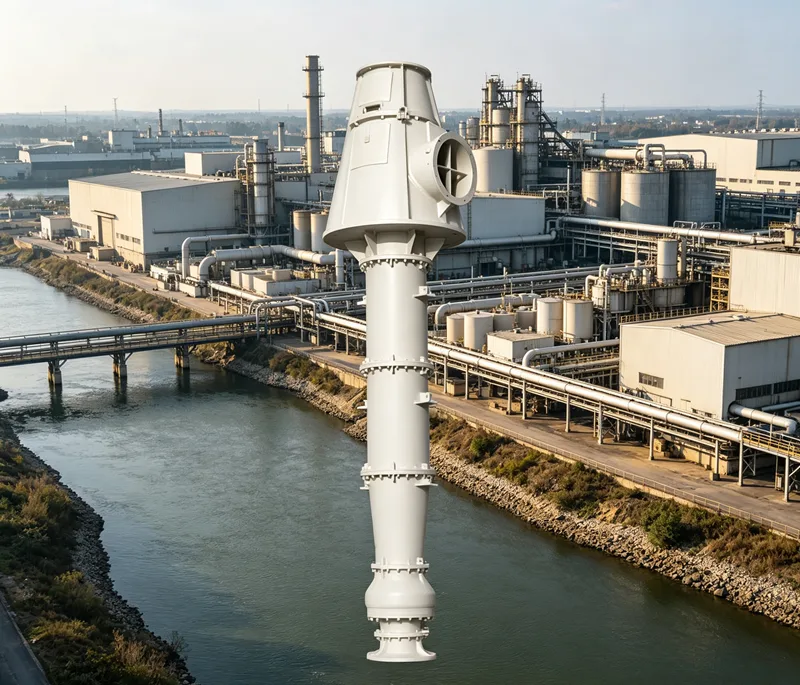
Paper mills move vast volumes of water, caustic liquors, fibrous slurries, and abrasive effluents every day. Much of that fluid sits in underground sumps, collection pits, or storage tanks at negative elevation — exactly where horizontal pumps struggle with priming loss, cavitation, and motor flooding.
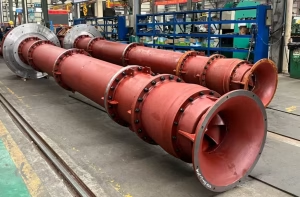
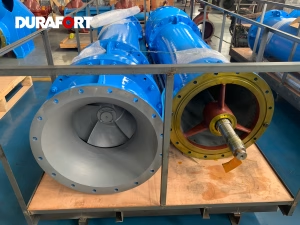
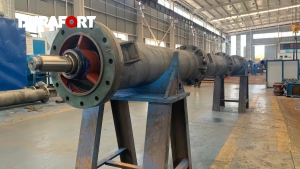
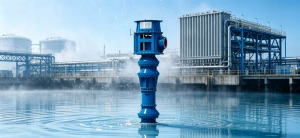
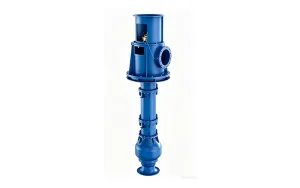
Máy bơm tuabin đứng LC (vertical line shaft pumps) address these problems at the design level. Motor stays topside. Hydraulics sit submerged. Footprint stays small. Metallurgy adapts to the service.
This guide covers where vertical turbine pumps fit in a paper mill, how to size them, and which materials survive each service environment.
Why Vertical Turbine Pumps Outperform Horizontal & Submersible Designs in Mills
| Tính năng | Operational Benefit in Paper Mills |
|---|---|
| Top-mounted motor | Zero risk of submersion or thermal damage from hot sump liquids |
| Submerged impellers | No priming, no air-lock, immediate start even after power loss |
| Custom column length | Engineered from 1m to 15m+ to reach deep pits and settling basins |
| Vertical footprint | Minimal floor space — critical in congested mill layouts and pumphouses |
These are not general-purpose pumps. LC vertical turbines are process pumps that run continuously, handle dirty fluids, and tolerate aggressive chemistry when specified correctly.
Four Primary Applications in Pulp & Paper Production
1. Raw Water Intake — River or Lake Stations
Mill intake stations pull from surface water sources with fluctuating levels, seasonal sediment loads, and occasional debris.
Problem: Suction level changes daily. Debris clogs strainers. Sand and silt accelerate wear on standard bronze-fitted pumps.
LC solution: Multi-stage vertical turbines maintain stable pressure across flow variations. Submerged first-stage impeller eliminates NPSH issues regardless of drawdown. Optional debris screens and abrasion-resistant trim extend service life in silty rivers.
2. White Water & Fiber Recovery Sumps
White water from the forming section contains short fibers, fillers, and chemical residuals. It collects in deep pits below machine level.
Problem: Fibers settle and mat at the bottom. Closed impellers clog. Standard pump columns often come up short.
LC solution: Specify semi-open, non-clog impellers with generous clearances. Column length custom-fit to pit depth. Pumps pull directly from the bottom to disk filters or save-all units without fiber buildup.
3. Kraft Recovery — Black Liquor & Green Liquor
Black liquor (digester spent liquor) and green liquor (smelt-dissolving) run hot — typically 150–180°C — with high alkalinity, high solids, and aggressive chloride content.
Problem: Submersible motors overheat and fail. Standard 316 stainless pits and cracks within months. Mechanical seals leak under thermal cycling.
LC solution: Motor stays cool and dry on the operating floor. Wetted parts in Duplex 2205, Super Duplex 2507, or nickel alloys handle both temperature and chemistry. External flush lubrication (enclosed line-shaft design) keeps bearings clean while pumping viscous, solids-laden liquors.
4. Effluent & Sludge Handling
Mill wastewater combines residual fibers, chemical sludge, and abrasive grit from bark and dirt carryover.
Problem: Abrasive wear + pH swings. Standard rubber bearings fail quickly. Pump downtime shuts down treatment trains.
LC solution: Hardened wear rings and abrasion-resistant metallurgy. External clean-water flush (mandatory for sludge service) protects guide bearings from particulate ingress. Result: 12–18 months of continuous operation between bearing replacements.
LC Series Technical Specifications — Durafort Pumps
Heavy-duty LC vertical turbine pumps manufactured to ISO 5199 / ANSI/HI 2.1-2.2 standards:
| Tham số | Phạm vi |
|---|---|
| Capacity (Q) | 50 – 8,400 m³/h (220 – 37,000 GPM) |
| Total Head (H) | 15 – 400 m (50 – 1,300 ft) |
| Tốc độ | 980 / 1,480 / 2,970 rpm (60 Hz variants available) |
| Max Fluid Temperature | 180°C (356°F) — higher with alloy upgrades |
| Peak Hydraulic Efficiency | Tối đa 88% |
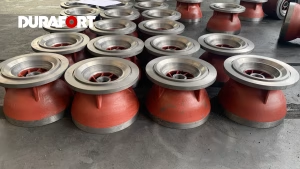
| Impeller Types | Enclosed (clean fluids) / Semi-Open (slurries & fibers) |
Material Selection Matrix — Match Metallurgy to Mill Service
Wrong metallurgy is the single biggest cause of premature vertical pump failure in paper mills. Use this table as your starting reference:
| Service Medium | Recommended Materials | Rationale |
|---|---|---|
| River / lake water (clean) | Cast iron, ductile iron, or SS304 | Cost-effective; adequate for low-silt, non-corrosive duty |
| White water / low-consistency stock | SS316L, 904L | Resists mild acids, alum, and chloride pitting |
| Black liquor / green liquor (alkaline, hot) | Căn hộ hai tầng 2205, Thép Super Duplex 2507 | High yield strength + excellent SCC and erosion resistance |
| High chloride / bleach plant effluent | CD4MCu, Alloy 20, Alloy 31, Hastelloy C | Maximum pitting resistance equivalent (PRE) for aggressive Cl⁻ environments |
| Acidic chemical drains | Monel, Inconel, Titanium (TA2 / TA10) | When nothing else survives — ultimate corrosion margin |
Critical note: Do not specify cast iron or 316 stainless for black liquor service above 120°C. Stress corrosion cracking will occur. We see this failure mode repeatedly in mill audits.
Five Engineering Decisions That Determine Pump Reliability
Get these five selection details right, and your LC vertical turbine pump will run 3–5 years with minimal intervention.
1. Impeller Type — Semi-Open vs. Enclosed
- Semi-open: Required for white water, pulp slurry, and any fluid with fiber content >0.5%. Open vanes prevent wrapping and plugging.
- Enclosed: Use only for raw water and clarified liquids where maximum efficiency justifies the clogging risk.
2. Bearing Lubrication — Open vs. Enclosed Line Shaft
- Open (product-lubricated): Pumped fluid wets rubber bearings. Acceptable for clean raw water only.
- Enclosed (external flush): Clean water or grease fed down the column pipe. Mandatory for black liquor, white water, and silty raw water. Flush flow rate: 0.5–2 GPM per bearing.
3. Shaft Sealing — Gland Packing vs. Mechanical Seals
- Gland packing: Low first cost. Works for raw water intake. Expect minor leakage (per API 610 allowance).
- Single / double mechanical seals (API Plan 53 or 54): Required for hot black liquor or hazardous effluents. Double seals with barrier fluid provide zero emissions and tolerate thermal cycling.
4. Column Length & Bearing Spacing
- Specify column length to reach 1–2 meters above sump floor (prevents solids settling into impeller eye).
- Maximum bearing span: 1.5–1.8 meters. Longer spans require intermediate bearings to prevent shaft deflection and vibration.
5. Flushing Water Quality & Pressure
- External flush water must be clean, cool, and 1–2 bar higher than pump discharge pressure.
- Never use mill effluent or unfiltered river water for bearing flush — that defeats the purpose.
Why Durafort Pumps for Your Mill Project?
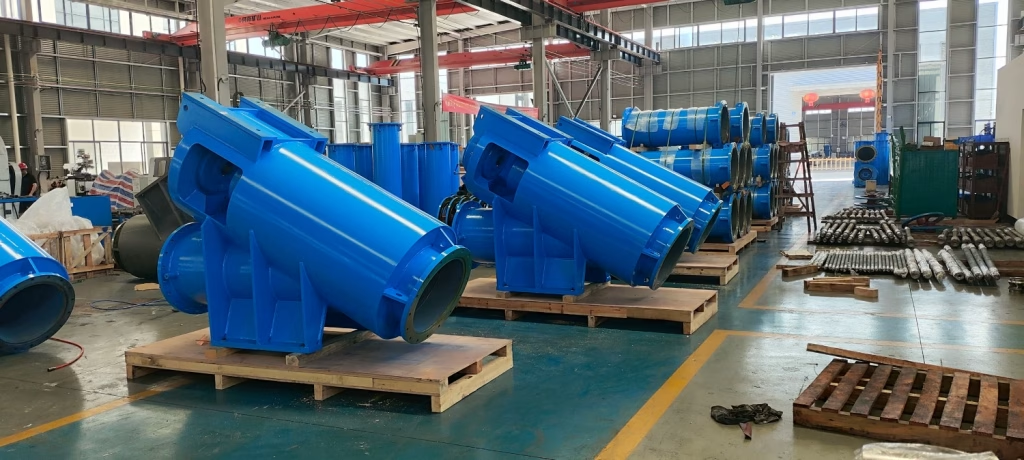
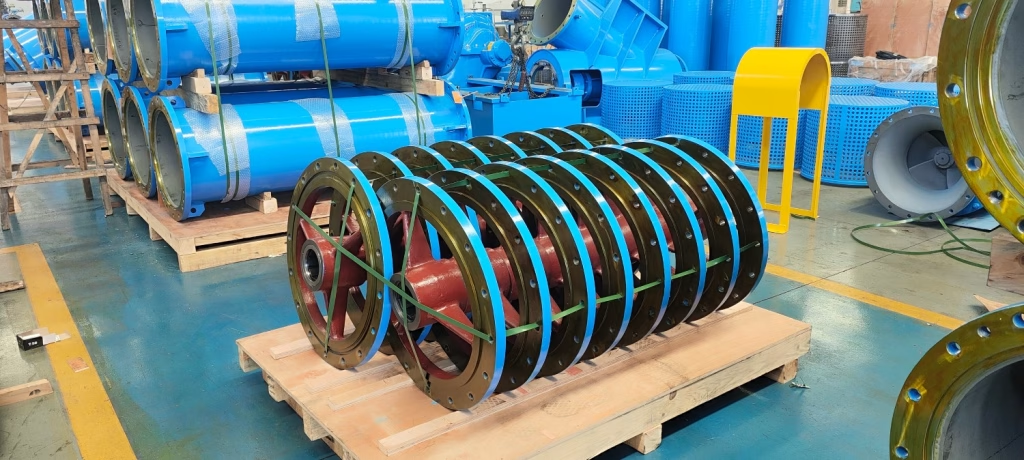
Hunan Durafort Pumps is a specialized industrial pump manufacturer serving power, mining, chemical, and pulp & paper sectors worldwide. Our LC vertical turbine pumps are engineered for continuous heavy-duty service, not light commercial duty.
We supply the full pump package:
- Hydraulic design (CFD-optimized)
- 3D solid modeling and interference checking
- In-house casting of duplex stainless steels and nickel alloys
- Full-performance factory testing with NPSH verification
Complementary mill pumps from Durafort:
- XSP Horizontal Split-Case Pumps — high-efficiency, double-suction for mill circulation water
- HD Vertical Mixed-Flow Pumps — medium-head, high-capacity intake service
- ZLB Vertical Axial-Flow Pumps — ultra-high flow, low-head drainage and transfer
Get a Pump Recommendation for Your Specific Mill Application
We respond to technical inquiries with numbers — not generic brochures.
Send us:
- Pumped fluid (with chemistry and temperature)
- Flow rate and total head
- Sump or tank geometry (depth, diameter)
- Any existing metallurgy preferences or corrosion history
Contact engineering support directly:
- Trang web: https://deyangforge.com
- Email: sales@deyangforge.com
- Product focus: Máy bơm tuabin đứng LC | Duplex 2507 & Alloy Pumps for Paper Mills