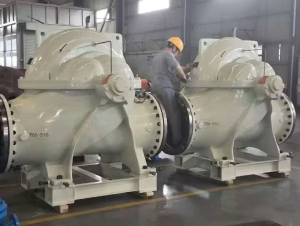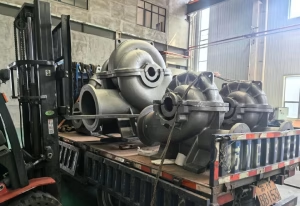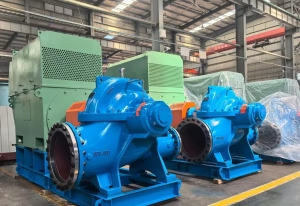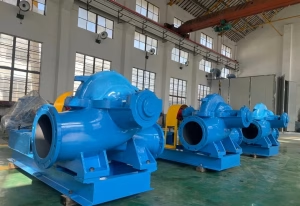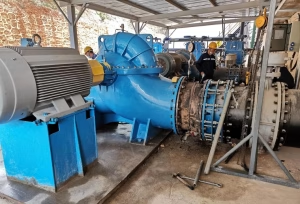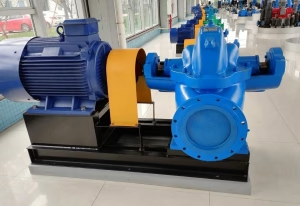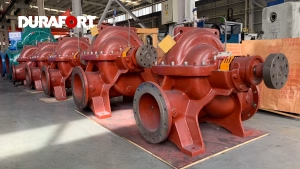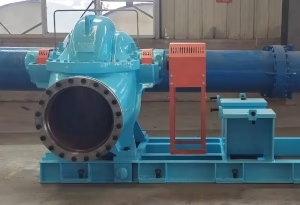
When specifying horizontal split case pumps for municipal water supply applications – such as water treatment plants, booster stations, or raw water intake – one of the most critical decisions is the pump casing material. The two most common and cost-effective choices are gray cast iron et ductile iron (also known as nodular or spheroidal graphite iron) .
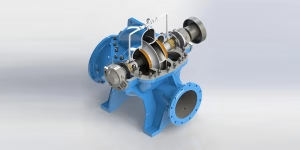
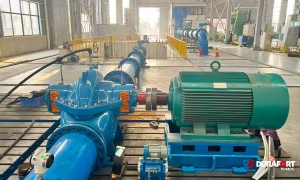
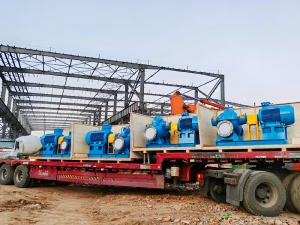
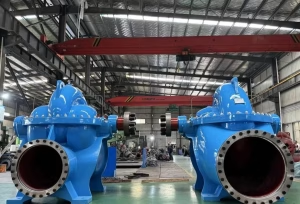
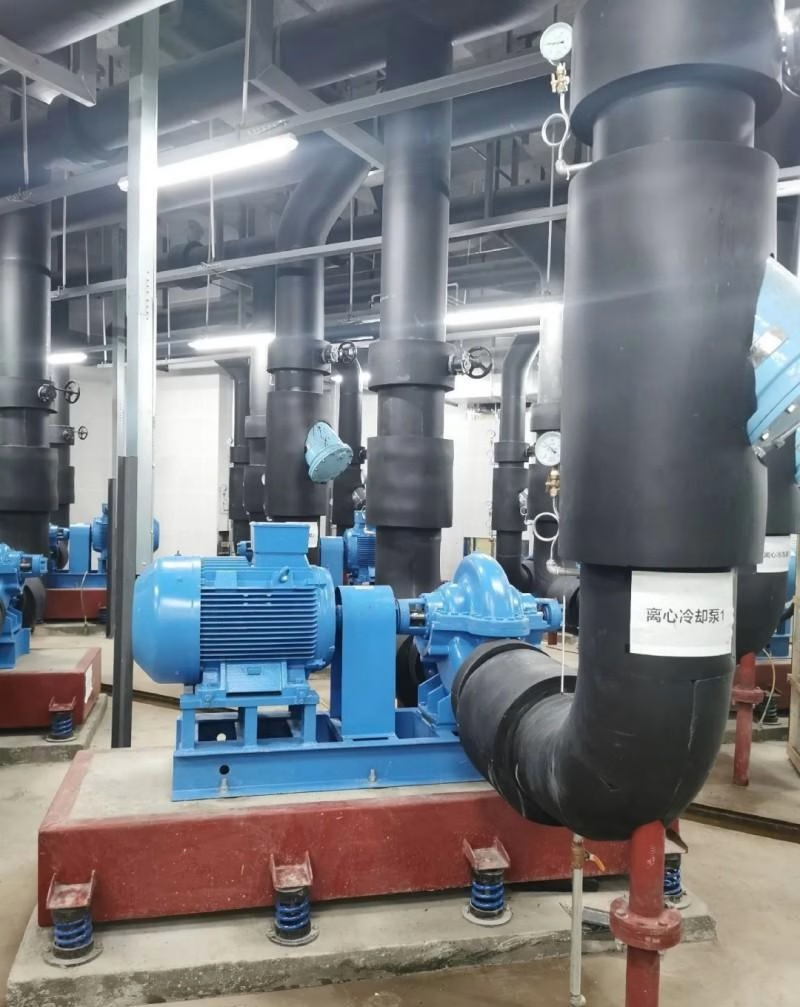
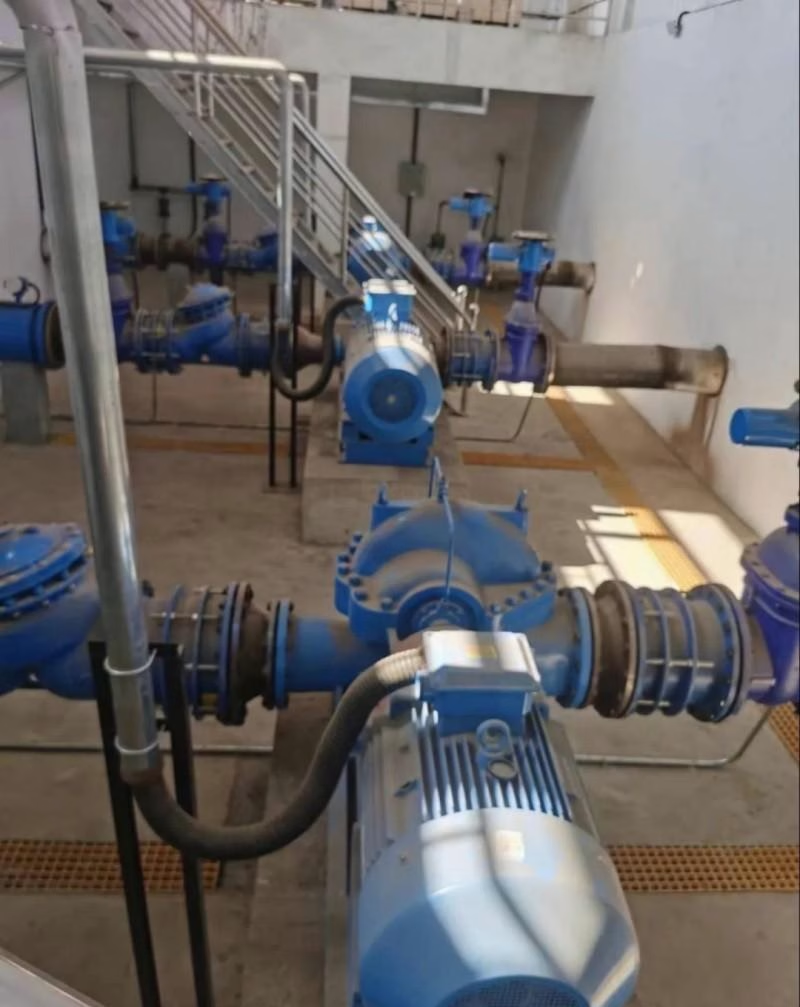
But which one truly performs better over the 20–30 year lifespan of a municipal water system? In this article, we will compare these materials across key engineering parameters: strength, impact resistance, corrosion behavior, pressure rating, and total cost of ownership. We will also draw on real-world pump examples like the Pompe à corps divisé horizontal XSP from Pompe Hunan Durafort, a professional Chinese pump manufacturer producing high-efficiency split case pumps in various alloys including carbon steel, stainless steel, duplex, and titanium.
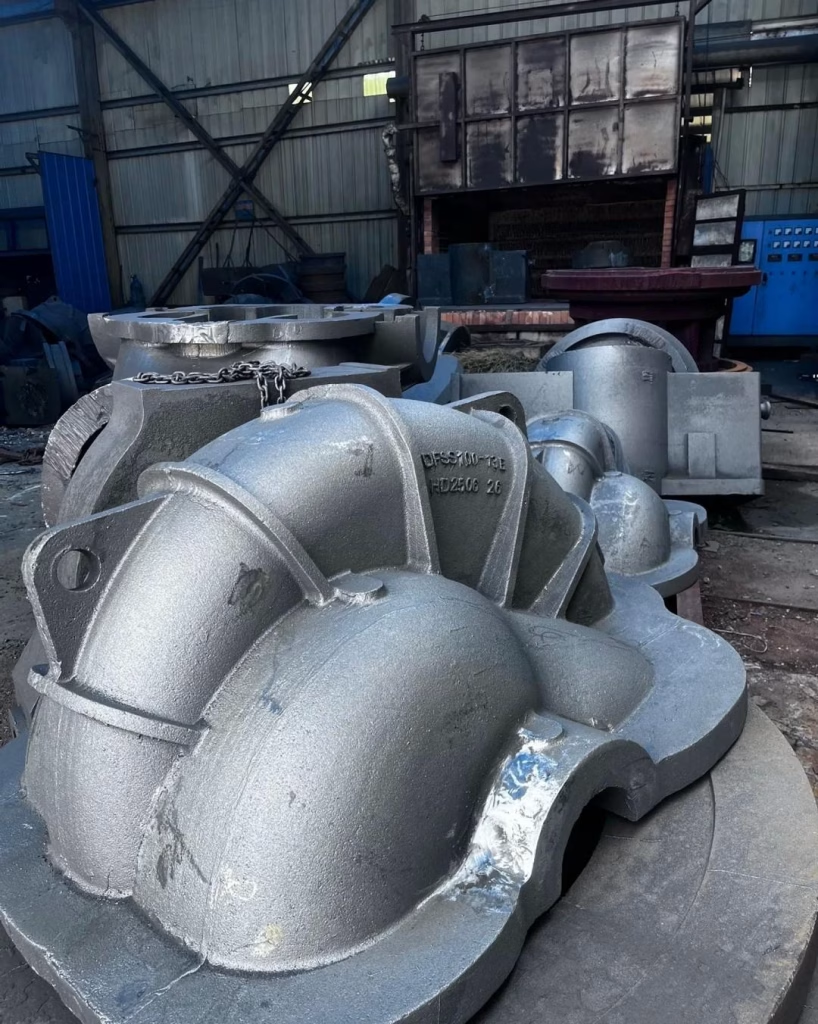
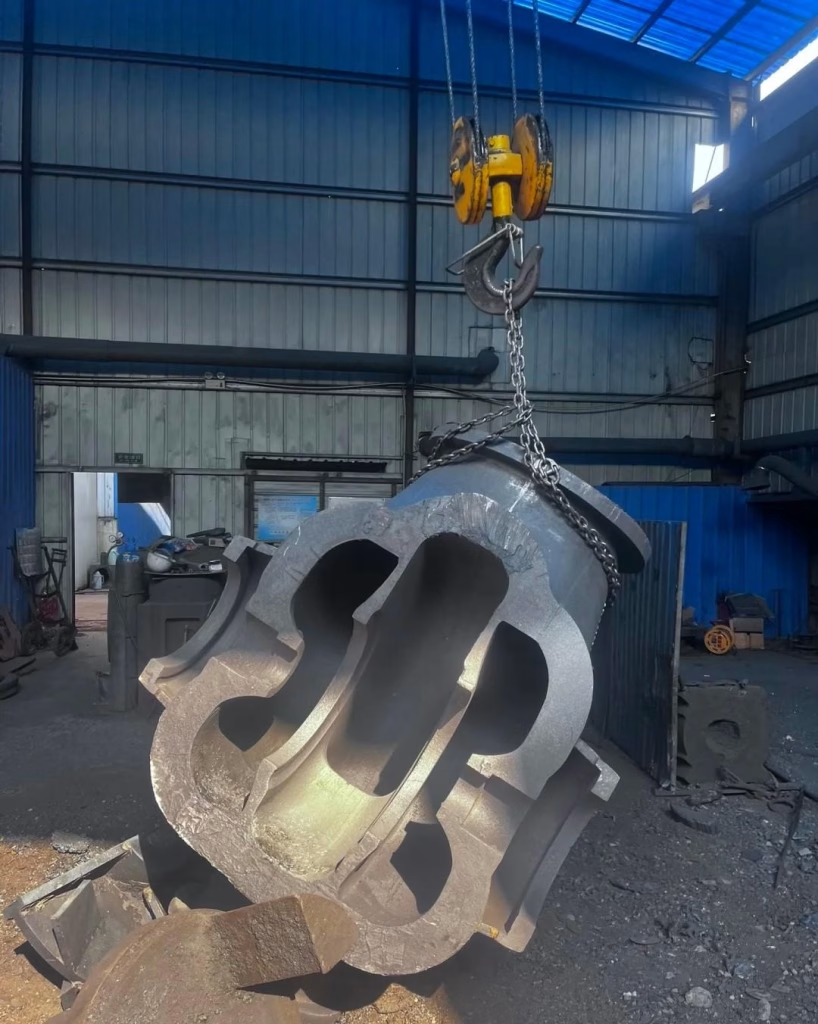
Quick Material Overview
| Propriété | Gray Cast Iron | Fonte ductile |
|---|---|---|
| Tensile strength | 20,000 – 40,000 psi | 60,000 – 120,000 psi |
| Elongation (ductility) | < 1% (brittle) | 10% – 18% (ductile) |
| Impact resistance | Faible | High (similar to steel) |
| Corrosion resistance (clean water) | Bon | Good (slightly better due to denser microstructure) |
| Machinability | Excellent | Très bon |
| Cost per kg | Lower | Moderately higher (~10-20%) |
1. Mechanical Strength & Pressure Rating
Municipal water distribution systems often experience pressure surges (water hammer) during pump start/stop or valve closure. The pump casing must withstand these transient spikes.
- Gray cast iron has high compressive strength but low tensile strength. It can handle steady pressures well but is prone to brittle fracture under sudden impact or over-pressure.
- Fonte ductile exhibits similar yield strength to carbon steel, with excellent elongation. It absorbs shock and hydraulic hammer without cracking.
Verdict: For high-head booster stations or large-diameter mains where pressure fluctuations are common, ductile iron is clearly superior.
Hunan Durafort’s XSP split case pump, when specified for municipal applications, is often offered in ductile iron for pressures exceeding 1.6 MPa or where water hammer is a concern.
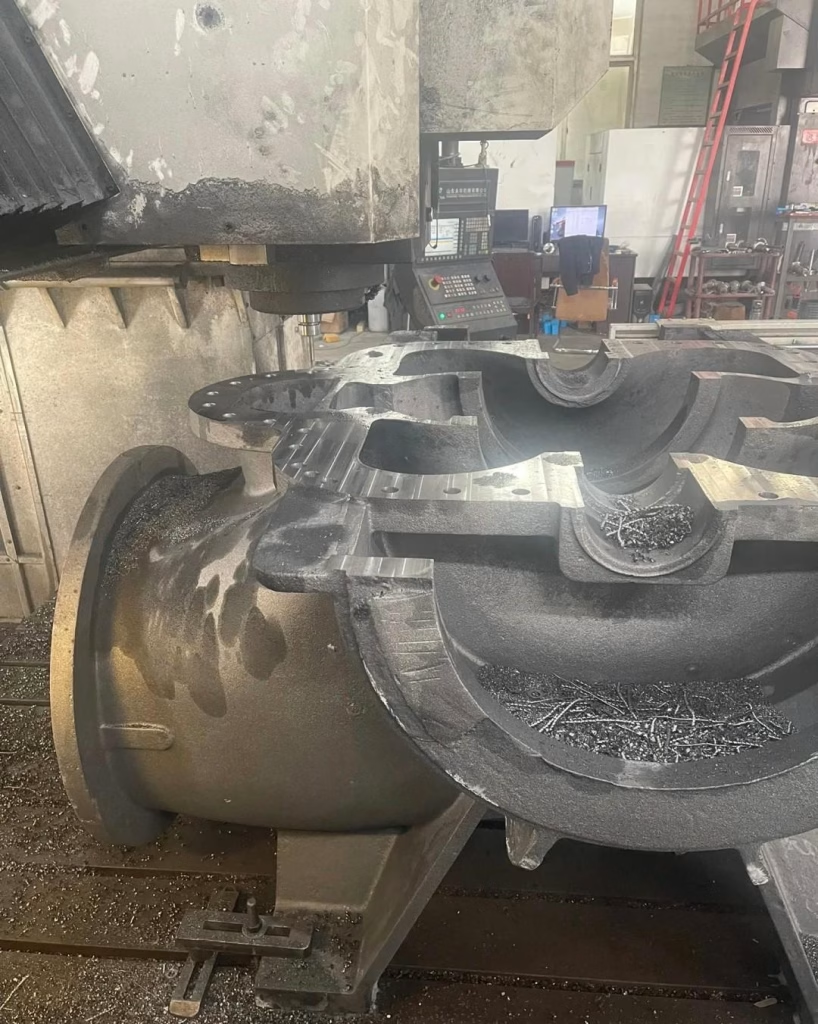
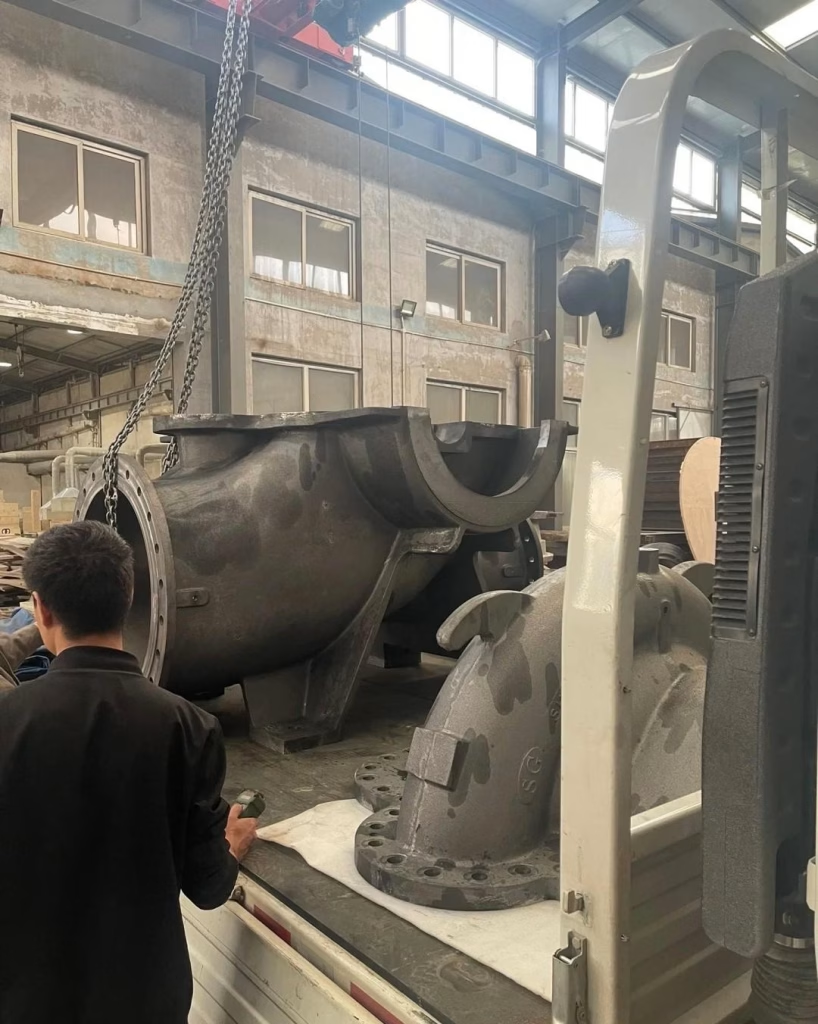
2. Corrosion & Erosion Resistance
Municipal water is rarely pure – it contains dissolved oxygen, chlorides, pH variations, and sometimes abrasives (sand, silt). Over decades, internal corrosion can degrade pump performance.
- Gray cast iron forms a stable graphite layer on the surface, which can be protective but also promotes graphitic corrosion in soft or acidic waters.
- Fonte ductile has a finer, more uniform microstructure. With proper coating (epoxy, polyurethane), it resists pitting and tuberculation better. Many ductile iron pumps are lined with fusion-bonded epoxy for aggressive water chemistries.
Verdict: For clean, pH-neutral water, both perform acceptably. For slightly aggressive or low-pH groundwater, ductile iron with internal coating is the preferred choice.
3. Impact & Accidental Damage
Pump stations are harsh environments. During installation, maintenance, or flood events, casings may be struck by tools, debris, or heavy objects. A cracked casing means emergency shutdown and costly repair.
- Gray cast iron can crack from a single heavy impact. This is a well-documented failure mode in field operations.
- Fonte ductile bends before breaking. Even if severely overloaded, it will yield rather than shatter – allowing for safe shutdown without catastrophic failure.
Verdict: Ductile iron is overwhelmingly better for impact toughness – a key safety and reliability factor for municipal infrastructure.
4. Machinability & Repair
Gray cast iron is easier to machine due to its graphite flakes acting as chip breakers. However, repair welding is extremely difficult (requires special preheat and nickel-based rods). Ductile iron can be welded with proper procedure, though not as easily as steel.
Verdict: Gray cast iron is slightly easier to machine initially, but ductile iron offers more repair options after years of service.
5. Lifecycle Cost Analysis
Municipal buyers often focus on first cost. Gray cast iron is cheaper – typically 10–20% less than ductile iron for the same pump casting. However, consider:
- Downtime cost: A fractured gray iron casing may require complete pump replacement (weeks of downtime). Ductile iron casings rarely crack, avoiding this risk.
- Maintenance intervals: Ductile iron’s superior wear and corrosion resistance can extend the mean time between overhauls.
- Resale value: Ductile iron pumps have higher residual value.
For a 20-year municipal water supply project, ductile iron offers lower total cost of ownership despite higher upfront cost.
Summary Table: Which Material Wins for Each Criterion?
| Criterion | Winner |
|---|---|
| Maximum pressure rating | Fonte ductile |
| Impact / water hammer resistance | Fonte ductile |
| Corrosion resistance (coated) | Tie (both need coating for aggressive water) |
| First purchase cost | Gray cast iron |
| Repairability | Fonte ductile |
| Long-term reliability | Fonte ductile |
| Availability | Both widely available |
Real-World Recommendation from Pump Manufacturers
As a leading pump manufacturer, Pompe Hunan Durafort produces the Pompe à corps divisé horizontal XSP with flow rates up to 38,000 m³/h and heads up to 205m, achieving ~87% efficiency. For municipal water supply clients, their engineering team typically recommends:
- Gray cast iron only for low-pressure (<1.0 MPa), clean, non-corrosive water, and where budget is extremely constrained (e.g., temporary installations).
- Fonte ductile as the standard for all permanent municipal water supply duties, especially when:
- Operating pressure exceeds 1.2 MPa
- Water hammer potential exists
- Ambient temperatures below freezing (ice expansion risk)
- Long asset life is required (≥20 years)
“For over 90% of our municipal water supply projects, we specify ductile iron casings on the XSP series,” says a senior engineer at Hunan Durafort. “The small extra cost eliminates a major failure mode and gives our customers peace of mind for decades.”
Other Material Options for Special Conditions
While gray and ductile iron dominate standard municipal water supply, some environments demand more:
- SS304 / SS316L – For corrosive or high-purity water (e.g., desalination pre-treatment).
- Duplex SS2205 / Acier inoxydable super duplex SS2507 – For brackish or seawater intake with chlorides.
- 904L or Titanium – For aggressive chemical or high-chloride industrial wastewater.
- CD4MCu – For abrasive slurry or erosion-corrosion conditions.
However, for plain municipal water supply (drinking water, raw water, recycled water), ductile iron remains the best value.
Conclusion: Ductile Iron is the Clear Winner for Municipal Water Supply
Which is better: cast iron vs ductile iron horizontal split case pumps for municipal water supply?
Answer: Fonte ductile – unless your application has extremely low pressure and zero risk of water hammer.
Ductile iron provides the strength, toughness, and long-term reliability that municipalities need to ensure uninterrupted water service. The slightly higher initial investment pays back many times over through reduced failures and lower lifecycle costs.
When specifying your next horizontal split case pump – whether for a water treatment plant, booster station, or raw water intake – choose a reputable manufacturer like Pompe Hunan Durafort and ask for the ductile iron option on their Pompe à corps divisé XSP series. Your water system will thank you for decades.
About Hunan Durafort Pumps
Hunan Durafort Pumps Co., Ltd. is a professional pump manufacturer in China. Its product line includes the XSP split case pump, LC vertical turbine pump, HD vertical mixed flow pump, and ZLB vertical axial flow pump – available in carbon steel, ductile iron, stainless steel (304/316L), duplex (2205/2507), 904L, CD4MCu, titanium, and more. With flows up to 38,000 m³/h and efficiencies reaching 87%, Durafort pumps serve municipal, power, marine, irrigation, and industrial clients worldwide.
FAQs
Q: Can I use gray cast iron for a high-lift booster station?
A: Not recommended. Gray cast iron’s low impact strength makes it vulnerable to water hammer. Choose ductile iron instead.
Q: Does ductile iron rust?
A: Yes, ductile iron will corrode in water. However, municipal pumps are always coated internally (epoxy, polyurethane, or glass lining) to prevent rust.
Q: Is ductile iron more expensive to maintain?
A: No – its superior toughness reduces the risk of casing cracking, so maintenance costs are typically lower over the pump’s life.
Q: Which pumps does Hunan Durafort recommend for seawater applications?
A: For seawater, they recommend super duplex SS2507 or titanium casings, not iron-based materials.
This article is optimized for search engines. If you found it helpful, please share or link back. For specific pump quotations, contact Hunan Durafort Pumps directly.