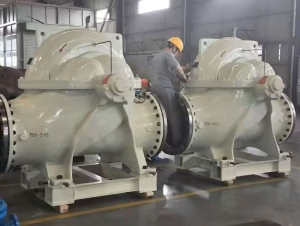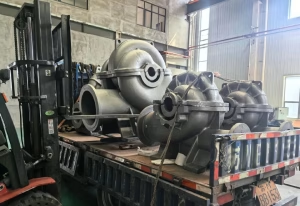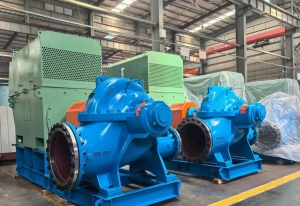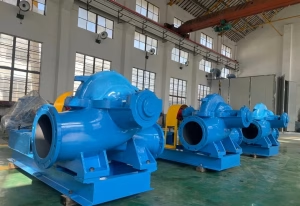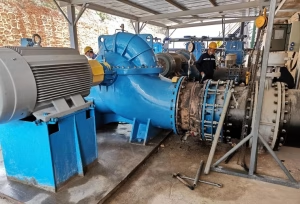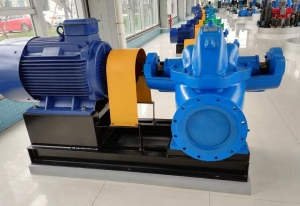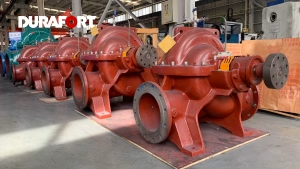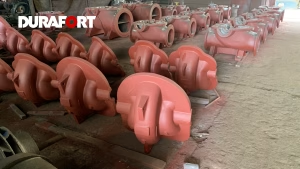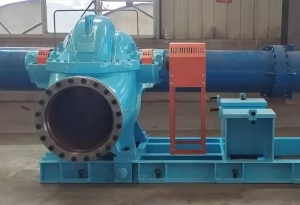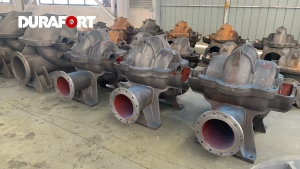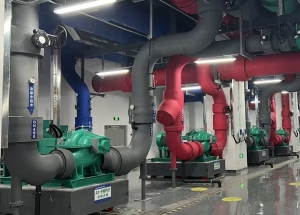
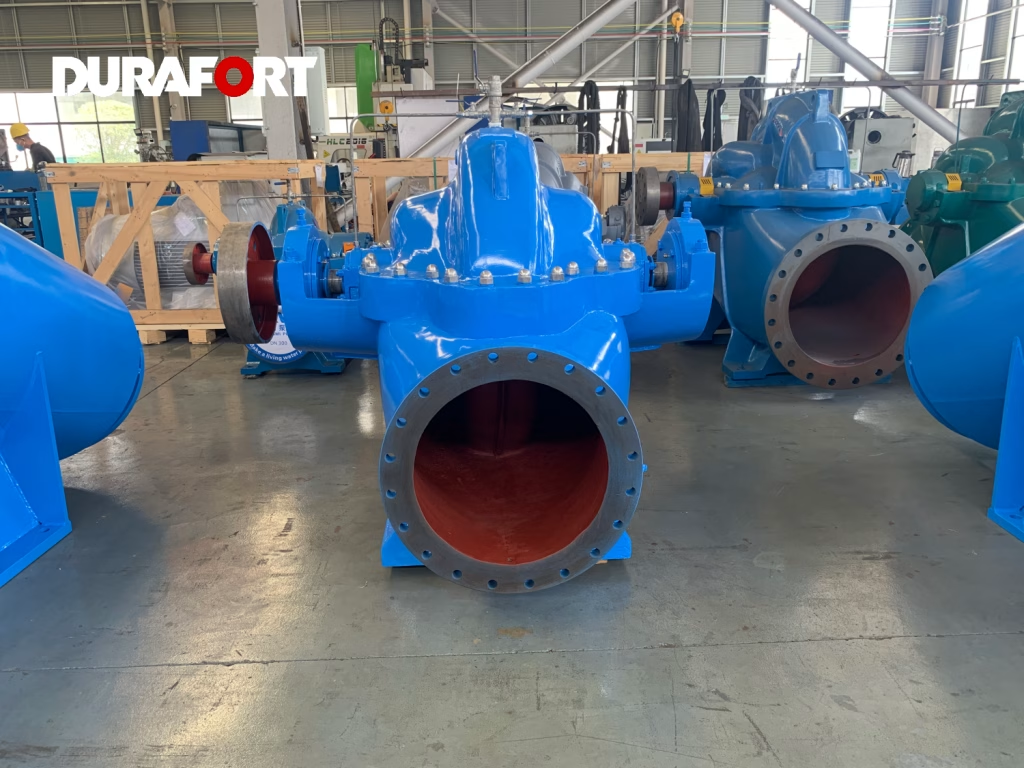
Ash sluicing is one of the most punishing pumping applications in any coal-fired power plant or industrial boiler system. Fly ash and bottom ash mixed with water form a highly abrasive slurry that rapidly erodes conventional pump components. When handling abrasives in ash sluicing applications, standard centrifugal pumps fail within weeks—but a properly configured split case pump can deliver years of reliable service.
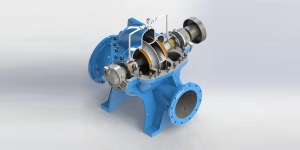
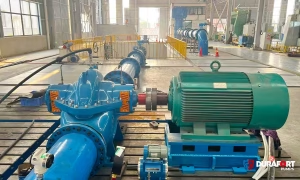
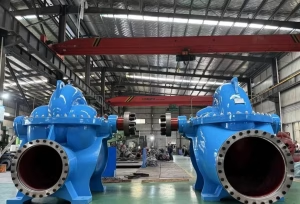
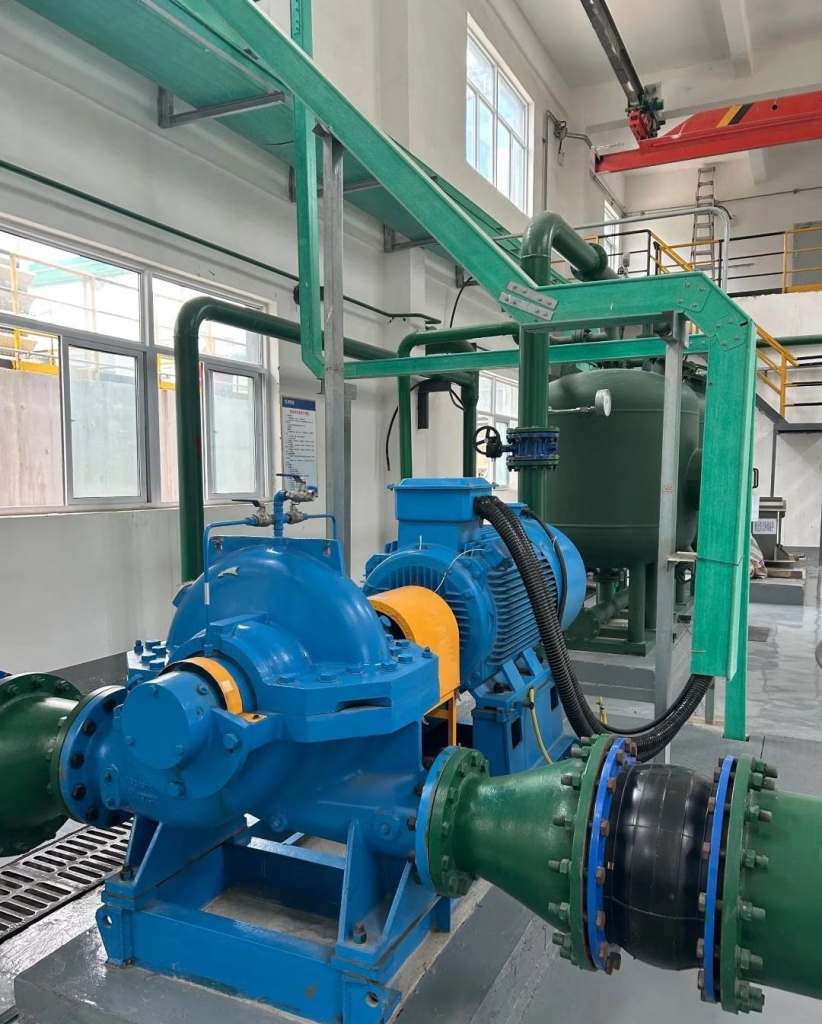
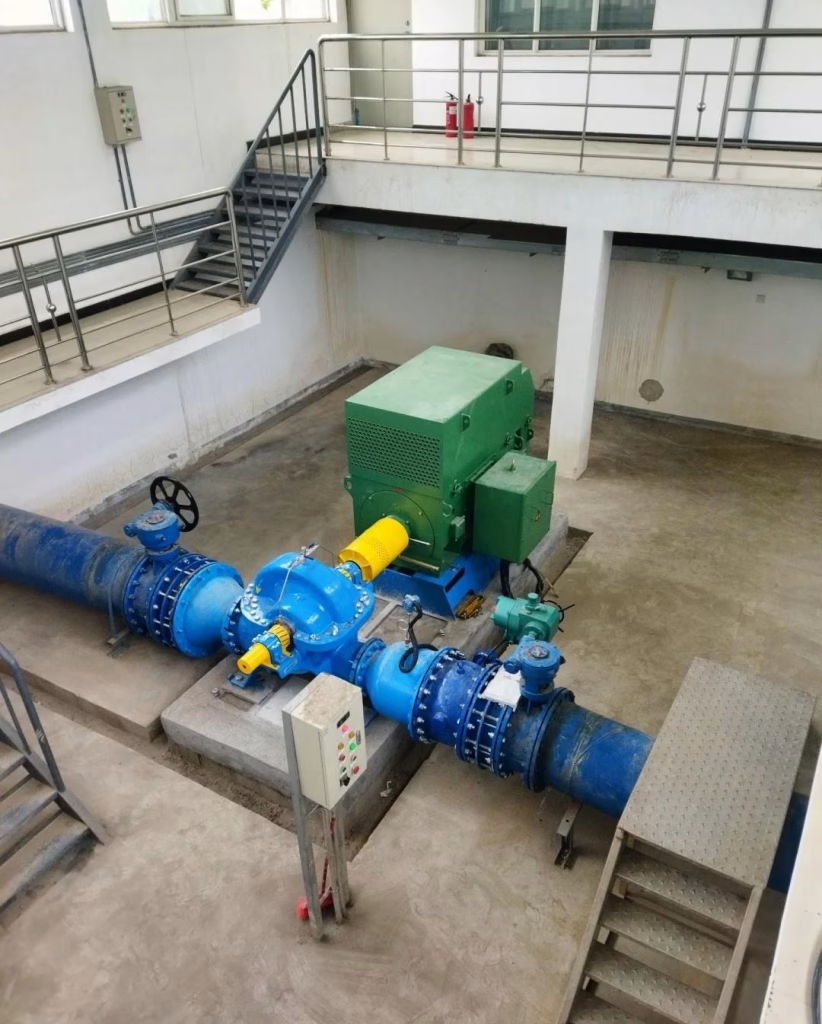
At Hunan Durafort Pumps, our XSP series horizontal split case pumps are engineered with abrasion-resistant materials, heavy-duty bearings, and replaceable wear parts specifically for ash handling, coal wash, and bottom ash transport systems.
Why Ash Sluicing Destroys Ordinary Pumps
Ash slurry contains hard, sharp particles (silica, alumina, unburned carbon) with a Mohs hardness of 5–7. When pumped at velocities above 3 m/s, these particles cause:
- Erosive wear on impeller vanes and casing volutes
- Rapid seal failure due to abrasive intrusion
- Shaft sleeve and bearing damage from particle ingress
- Reduced efficiency as internal clearances open up
The result? Frequent overhauls, unplanned downtime, and high maintenance costs.
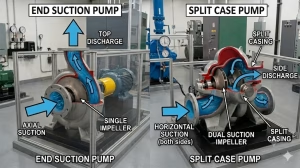
A horizontal split case pump offers inherent advantages for abrasive service:
- Easily accessible wear rings and throat bushings – Replace without removing piping or motor
- Double-suction design – Reduces axial thrust, keeping impeller centered to minimize wear
- Wide, low-velocity passages – Can be designed to reduce particle impact speed
Best Practice #1: Select the Right Metallurgy for Abrasive Slurries
Hunan Durafort offers a full range of materials for ash sluicing pumps. For abrasives, hardness and toughness are critical:
| Material | Hardness (HB) | Abrasion Resistance | Typical Application |
|---|---|---|---|
| Ductile iron (QT500-7) | 170–230 | Moderate | Light ash, intermittent service |
| SS304 / SS316L | 130–180 | Poor (soft, galling risk) | Not recommended for ash |
| Duplex SS2205 | 240–290 | Good | Low-to-medium ash content |
| Super Duplex SS2507 | 270–310 | Very good | High-velocity ash slurry |
| CD4MCu | 280–350 | Excellent | Highly abrasive + corrosive (low pH) |
| 904L | 160–220 | Moderate | Better for corrosion, not pure abrasion |
| Titanium | 200–250 | Good (but expensive) | Only if chlorides + abrasives present |
Recommendation for pure abrasion (coal ash, bottom ash): Ductile iron with hardened wear rings, or CD4MCu for combined abrasion + corrosion.
Best Practice #2: Optimize Pump Speed and Flow Velocity
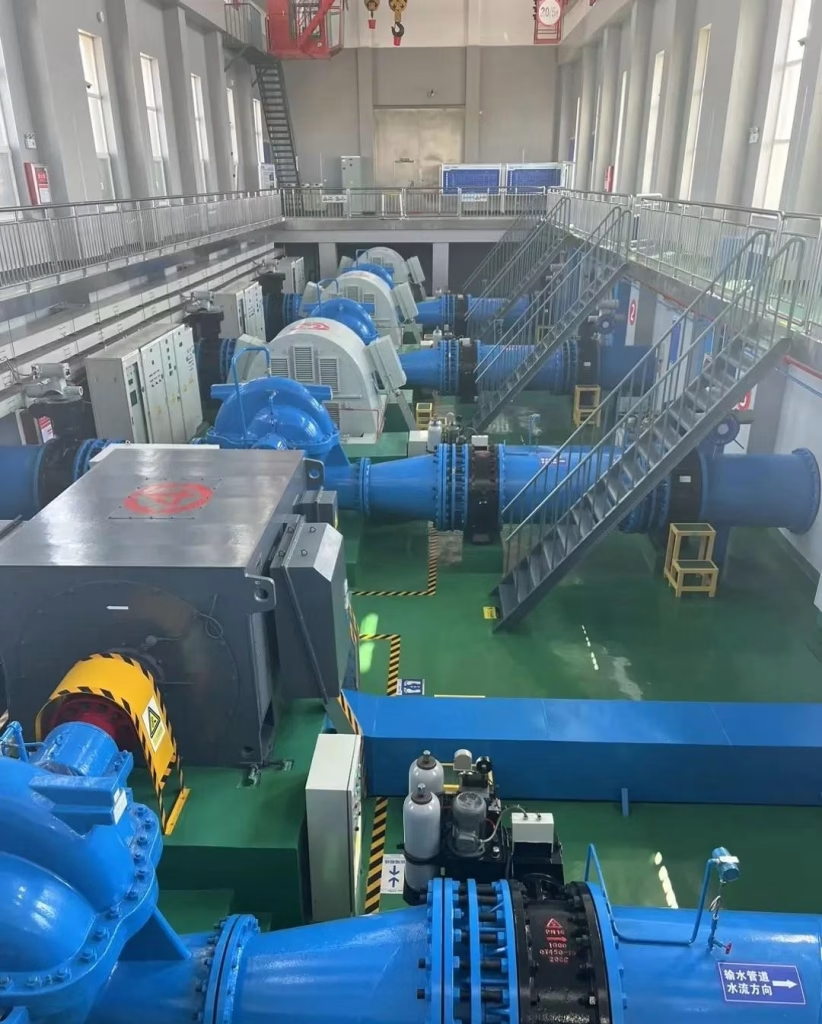
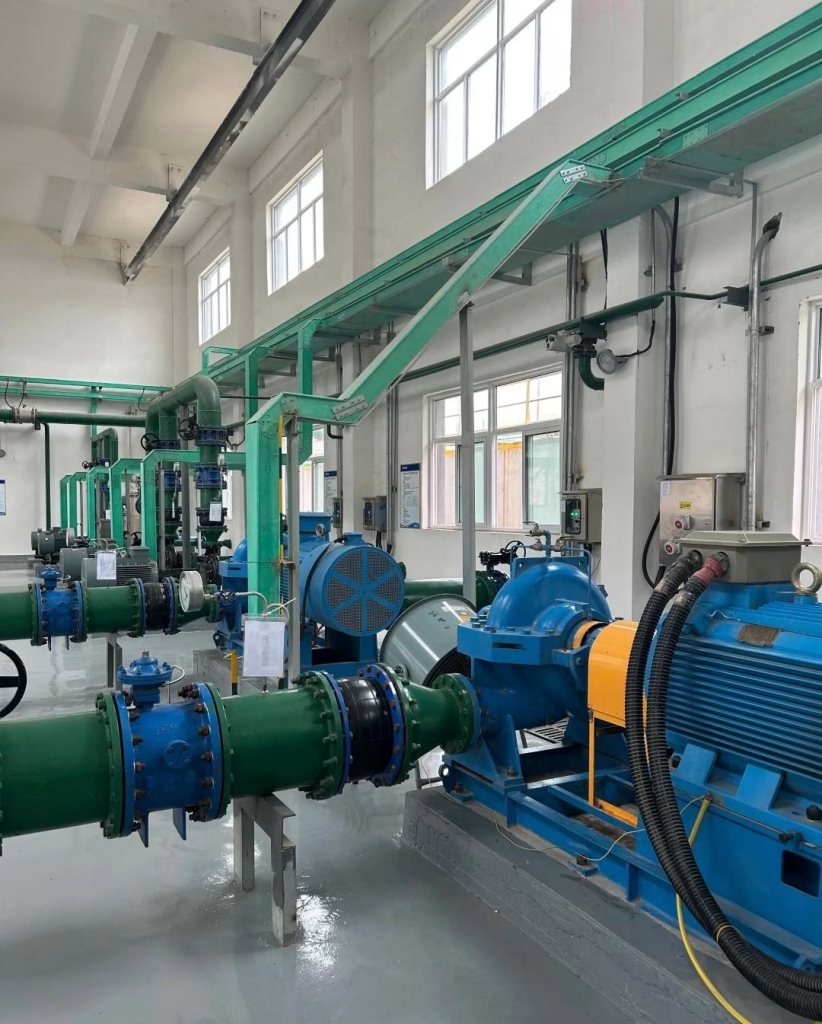
For ash sluicing, lower speed = longer life. Durafort’s XSP series operates at 2370–2970 rpm, but for severe abrasives we recommend:
- Reduced speed via VFD or pulley – 1450–1750 rpm significantly reduces particle impact energy
- Larger pump at lower speed – Same flow, lower velocity, longer wear life
- Keep flow velocity below 2.5 m/s in suction and discharge piping
Flow range for ash sluicing with XSP pump:
Even at reduced speed, the XSP can handle 135–38,000 m³/h —more than sufficient for bottom ash transport or fly ash slurry systems.
Best Practice #3: Use Replaceable Wear Components
A split case pump is only as good as its replaceable parts. In ash sluicing, specify:
- Hardened wear rings (min. 350 HB) on casing and impeller
- Throat bushings made of ceramic, Ni-Hard, or CD4MCu
- Shaft sleeves with carbide coating (tungsten carbide or chromium oxide)
- Heavy-duty mechanical seals with silicon carbide faces and flushed plan
The XSP’s split casing allows full access to all these components in under two hours—without disturbing the motor or pipework.
Best Practice #4: Design the Ash Sluicing System Correctly
Pump longevity starts with system design:
| Design Factor | Best Practice |
|---|---|
| NPSH available | Keep >1.5× NPSH required to avoid cavitation (cavitation + abrasion = catastrophic wear) |
| Suction piping | Short, straight, oversized to reduce particle settling |
| Tank agitation | Prevent ash from settling before the pump suction |
| Flushing water | Clean water flush to seals and stuffing box |
| Standby pump | Always install a redundant XSP pump; ash sluicing cannot tolerate downtime |
Industries Using Split Case Pumps for Ash Sluicing
While coal power plants are the most common, other sectors also require split case pumps for handling abrasives:
- Power Generation (Coal-Fired) – Bottom ash hopper evacuation, fly ash slurry transport to settling ponds
- Waste-to-Energy Plants – Grate ash and scrubber slurry pumping
- Cement Plants – Kiln dust and clinker slurry handling
- Steel Mills – Furnace slag and scale slurry
- Mining – Coal wash plants and tailings transport
“We replaced a vertical turbine pump with a Durafort XSP split case pump in CD4MCu material. Our ash sluicing system has run 18 months without impeller replacement—previous pumps failed every 3 months.” – Maintenance manager, 600MW coal plant, India
Durafort XSP: Built for Ash Sluicing Duty
| Parameter | XSP Value for Abrasive Service |
|---|---|
| Max flow | 38,000 m³/h (oversizing allows speed reduction) |
| Max head | 205 m (higher than needed for most ash sluicing) |
| Temperature limit | 150°C (handles hot bottom ash water) |
| Peak efficiency | ~87% (minimizes energy loss even with wear rings) |
| Material options | CD4MCu, Duplex 2507, Ductile iron with hardened rings |
Maintenance Checklist for Ash Sluicing Pumps
To maximize life when handling abrasives in split case pumps:
- Inspect wear rings every 3 months – replace when clearance doubles
- Check shaft sleeve wear – measure outer diameter
- Monitor motor current – an increase indicates internal wear
- Flush seals after every shutdown
- Keep spare impeller and casing wear rings in stock
Get a Wear-Resistant Ash Sluicing Pump Quote
Hunan Durafort Pumps engineers XSP horizontal split case pumps specifically for your ash handling system. Send us your:
- Flow rate (m³/h)
- Head (meters)
- Ash particle size and hardness
- Water chemistry (pH, chlorides)
We will recommend the optimal material (CD4MCu, Duplex 2507, or hardened ductile iron) and provide a wear life projection.
📧 Email: sales@deyangforge.com
🌐 Website: https://deyangforge.com