
NPSH stands for Net Positive Suction Head. It is one of the most critical concepts in pump system design. If you get it wrong, your pump will cavitate—causing noise, vibration, erosion, and catastrophic failure.
In this guide, you will learn:
- ✅ What is NPSH Required (NPSHr)?
- ✅ What is NPSH Available (NPSHa)?
- ✅ The NPSH formula and how to calculate both values.
- ✅ A real-world calculation example.
- ✅ How to prevent cavitation.
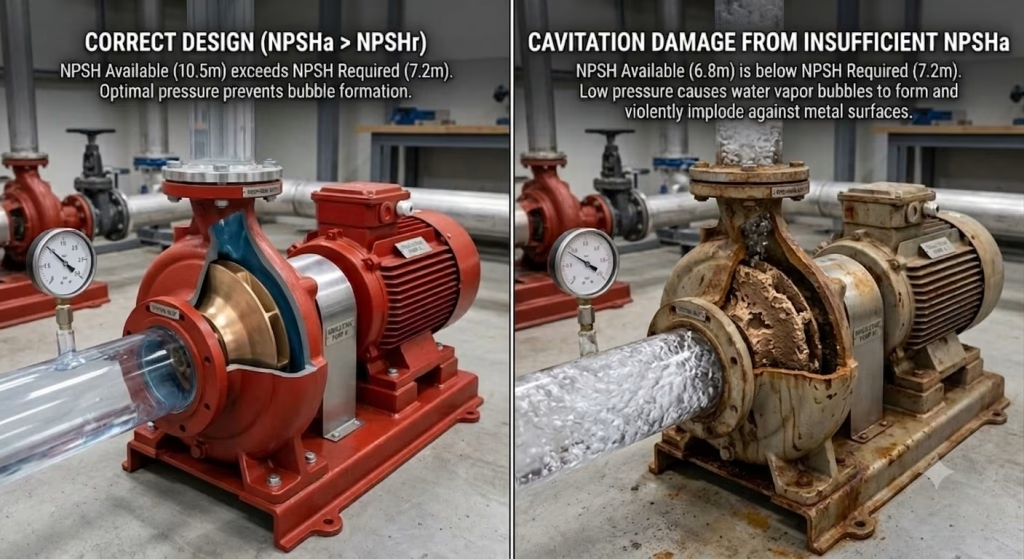
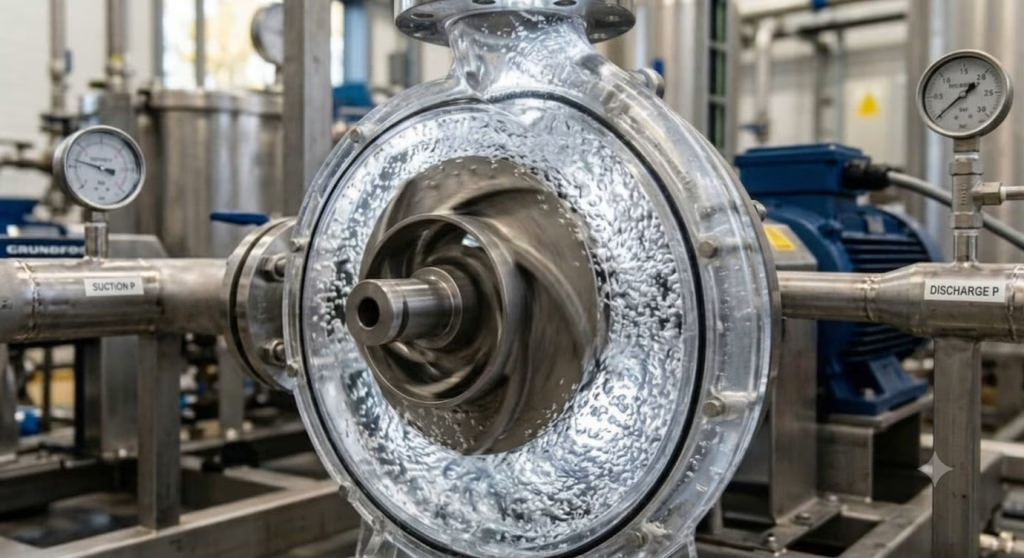
Figure 1: Cavitation bubbles forming inside a pump due to insufficient NPSH.
Part 1: What is NPSH Required (NPSHr)?
NPSH Required (NPSHr) is the minimum energy (in meters or feet of liquid) needed at the pump suction inlet to prevent cavitation. It is determined by the pump manufacturer through hydraulic performance testing.
Key points about NPSHr:
- It varies with pump speed and flow rate.
- Higher flow = higher NPSHr.
- It is NOT affected by the system layout—only by the pump’s design (impeller geometry, eye diameter, etc.).
- Manufacturers publish NPSHr curves in their pump catalogs.
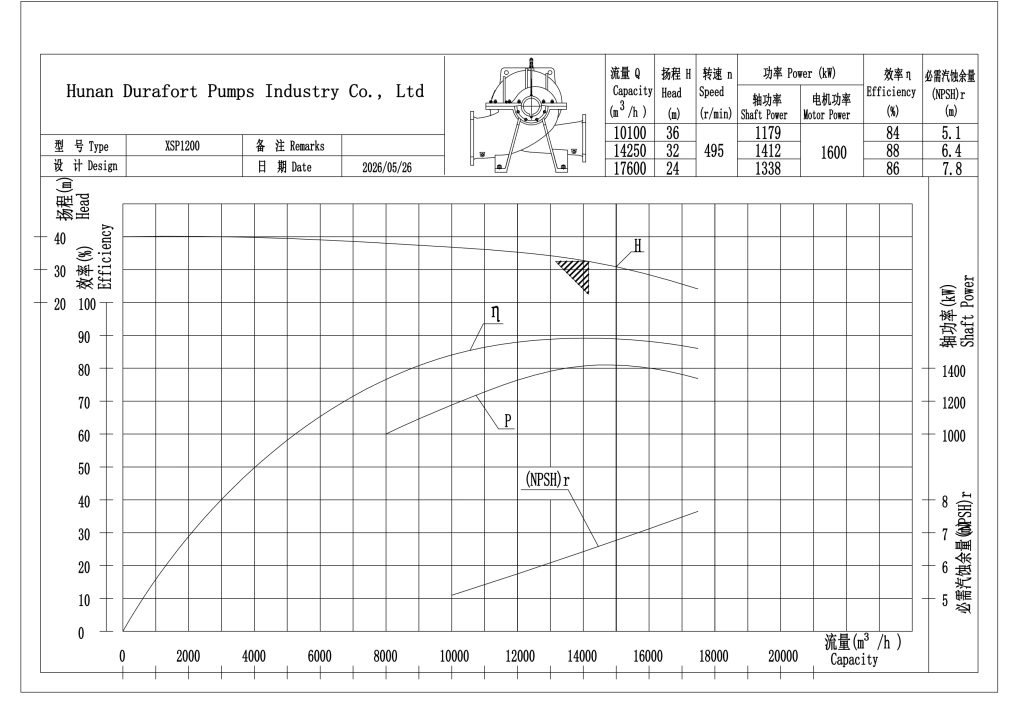
Example: A Durafort Pumps XSP split case pump at 14250 m³/h may have an NPSHr of 6.4 meters. At 17600 m³/h, the NPSHr rises to 7.8 meters.
Part 2: What is NPSH Available (NPSHa)?
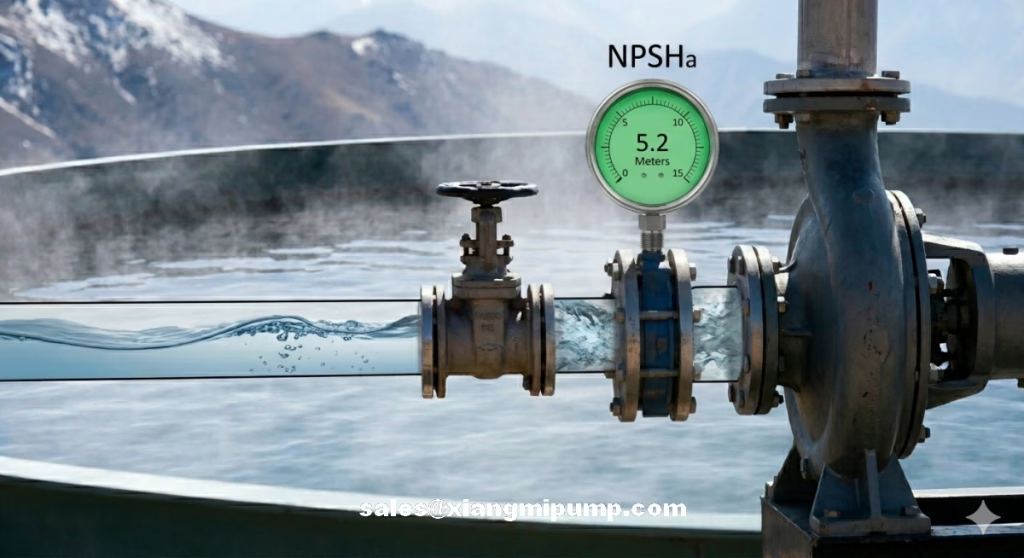
NPSH Available (NPSHa) is the actual energy available in the liquid at the pump suction flange. It is determined by your system design—tank location, pipe friction, liquid temperature, and atmospheric pressure.
NPSHa must always be greater than NPSHr, typically with a safety margin of 0.5 to 1 meter (or 10-20%).
If NPSHa < NPSHr → Cavitation occurs.
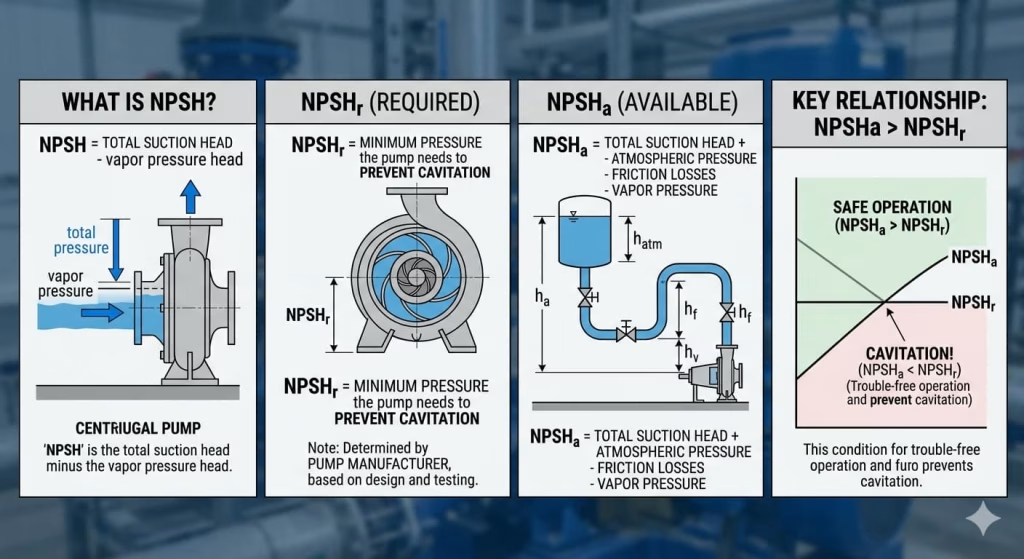
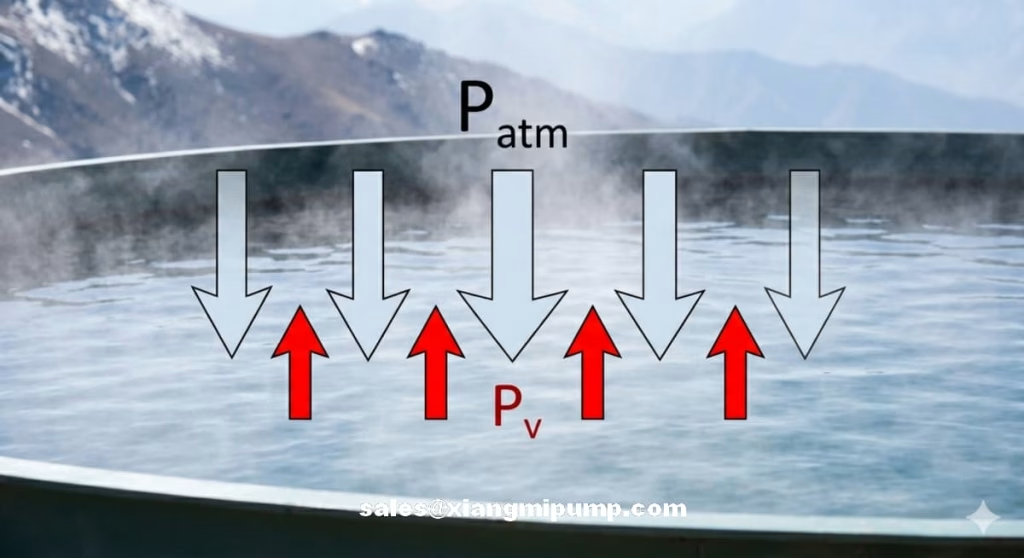
Figure 3: Components affecting NPSHa: atmospheric pressure, liquid level, friction losses, and vapor pressure.
Part 3: The NPSH Available Formula (How to Calculate NPSHa)
The universal formula for NPSHa (in meters of liquid):
NPSHa = Pa ± Pz – Pv – Hf
Where:
| Symbol | Meaning | Unit (meter) |
|---|---|---|
| Pa | Atmospheric pressure above the liquid (converted to meters of liquid) | m |
| Pz | Static height from liquid surface to pump centerline (+ for flooded suction, – for lift) | m |
| Pv | Vapor pressure of the liquid at operating temperature (converted to meters) | m |
| Hf | Friction losses in suction piping (including fittings, valves, strainers) | m |
Step-by-Step Calculation Example:
System conditions:
- Liquid: Water at 30°C
- Atmospheric pressure: 101.3 kPa (sea level)
- Tank open to atmosphere: Pa = 10.33 m (of water)
- Static height: Water level is 2 meters above pump centerline → Pz = +2.0 m
- Vapor pressure of water at 30°C = 4.24 kPa = 0.43 m
- Suction pipe friction loss = 1.2 m (including strainer and elbow)
Calculation:
NPSHa = Pa + Pz – Pv – Hf
NPSHa = 10.33 + 2.0 – 0.43 – 1.2
NPSHa = 10.7 meters
Check against NPSHr: If pump NPSHr = 3.5 m at the operating flow → NPSHa (10.7 m) > NPSHr (3.5 m) → ✅ Safe operation.
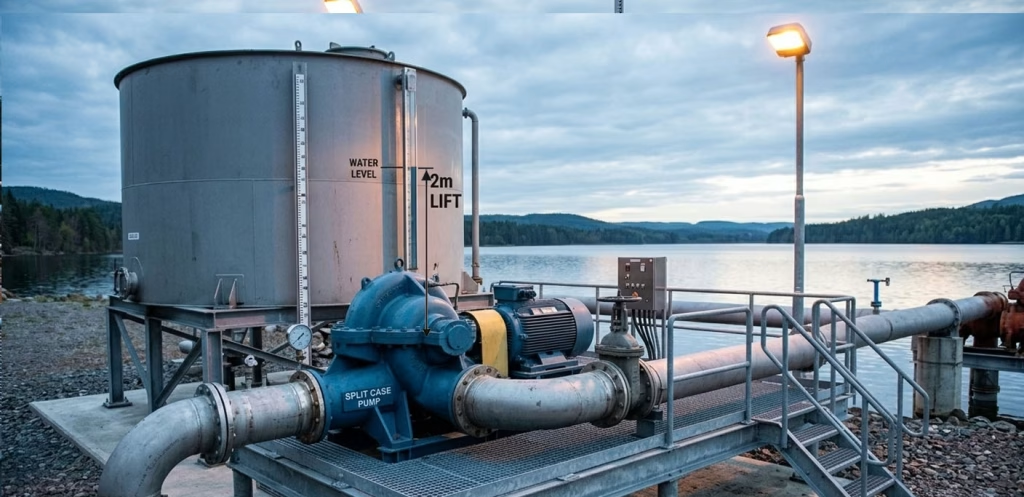
Figure 4: Worked example showing flooded suction arrangement.
Part 4: Special Case – Suction Lift (Negative Pz)
If the pump is located above the liquid source (suction lift), Pz becomes negative.
Example with suction lift:
- Liquid level is 1.5 meters below pump centerline → Pz = –1.5 m
- Same Pa = 10.33 m, Pv = 0.43 m, Hf = 1.2 m
Caculation:
NPSHa = 10.33 + (–1.5) – 0.43 – 1.2
NPSHa = 7.2 meters
Still above typical NPSHr (3-5 m), but closer. Always leave a safety margin.
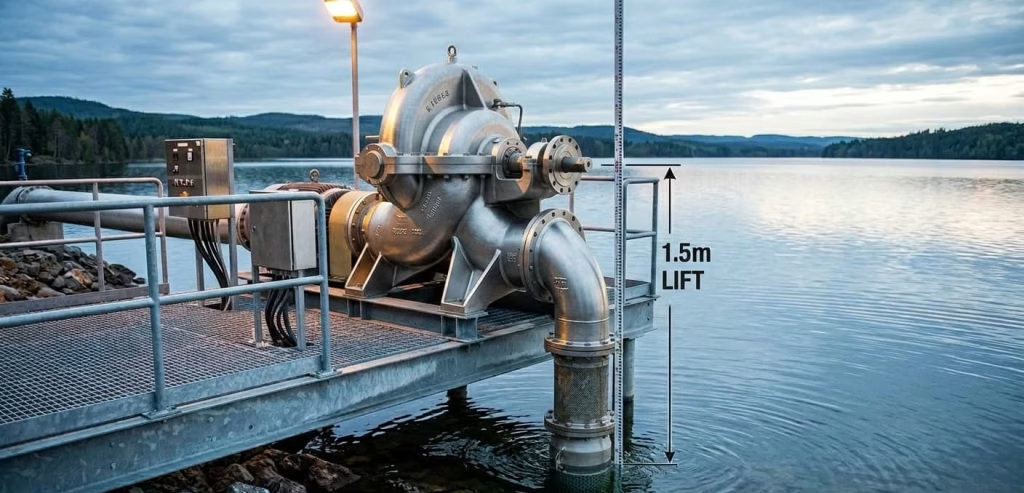
Figure 5: Suction lift configuration reduces NPSHa.
Part 5: How to Find NPSH Required (NPSHr) for a Pump
You cannot “calculate” NPSHr—it is tested by the manufacturer. Look for:
- Pump Datasheet or Performance Curve – Most horizontal split case pumps (like Durafort Pumps XSP) include an NPSHr curve.
- Typical NPSHr values for split case pumps:
- Small pumps (100 m³/h): NPSHr ≈ 2–3 m
- Medium pumps (1000 m³/h): NPSHr ≈ 3–5 m
- Large pumps (10,000 m³/h): NPSHr ≈ 6–9 m
Figure 6: Pump performance curve showing NPSHr for Pompe à corps divisé XSP.
Example – Durafort Pumps XSP series:
- At 2000 m³/h, NPSHr ≈ 4.2 m (consult factory for exact curve)
- At 5000 m³/h, NPSHr ≈ 6.5 m
Part 6: NPSH Safety Margin Rules
| Demande | Recommended Margin |
|---|---|
| Water, low temperature | NPSHa > NPSHr + 0.5 m |
| Hydrocarbons / hot water | NPSHa > NPSHr + 1.0 m |
| Critical / high-speed pumps | NPSHa > NPSHr + 1.5 m |
| API 610 standard | NPSHa ≥ NPSHr × 1.2 |
Part 7: Quick NPSH Calculation Checklist
To calculate NPSHa for any system:
- Step 1: Determine Pa (atmospheric pressure at your elevation).
- Step 2: Measure Pz (vertical distance from liquid surface to pump centerline).
- Step 3: Find Pv (vapor pressure of liquid at operating temperature).
- Step 4: Calculate Hf (total friction loss in suction piping).
- Step 5: Apply formula: NPSHa = Pa ± Pz – Pv – Hf.
- Step 6: Compare to NPSHr from pump datasheet.
- Step 7: Ensure NPSHa > NPSHr + safety margin.
Common NPSH Mistakes to Avoid
| Mistake | Consequence |
|---|---|
| Ignoring vapor pressure (Pv) for hot liquids | Severely overestimating NPSHa |
| Forgetting friction losses in suction pipe | Cavitation at high flow |
| Using pump NPSHr at wrong flow rate | False confidence |
| No safety margin for temperature fluctuations | Intermittent cavitation |
| Suction pipe too small or too long | High Hf, low NPSHa |
Summary Table: NPSHr vs NPSHa
| Paramètres | NPSH Required (NPSHr) | NPSH Available (NPSHa) |
|---|---|---|
| Defined by | Pump manufacturer | System designer |
| Can you calculate it? | No — obtained from pump curve | Yes — use formula |
| Affected by flow rate? | Yes (increases with flow) | Yes (via Hf losses) |
| Affected by liquid temperature? | Non | Yes (through Pv) |
| Goal | Must be less than NPSHa | Must be greater than NPSHr |
Final Rule of Thumb
For a pump to operate without cavitation:
NPSHa (your system) > NPSHr (pump manufacturer)
If your calculation shows NPSHa is too low, you can:
- Raise the supply tank (increase Pz).
- Shorten or enlarge suction pipe (reduce Hf).
- Cool the liquid (lower Pv).
- Reduce pump speed (lower NPSHr).
- Select a pump with lower NPSHr (e.g., double-suction split case pump).
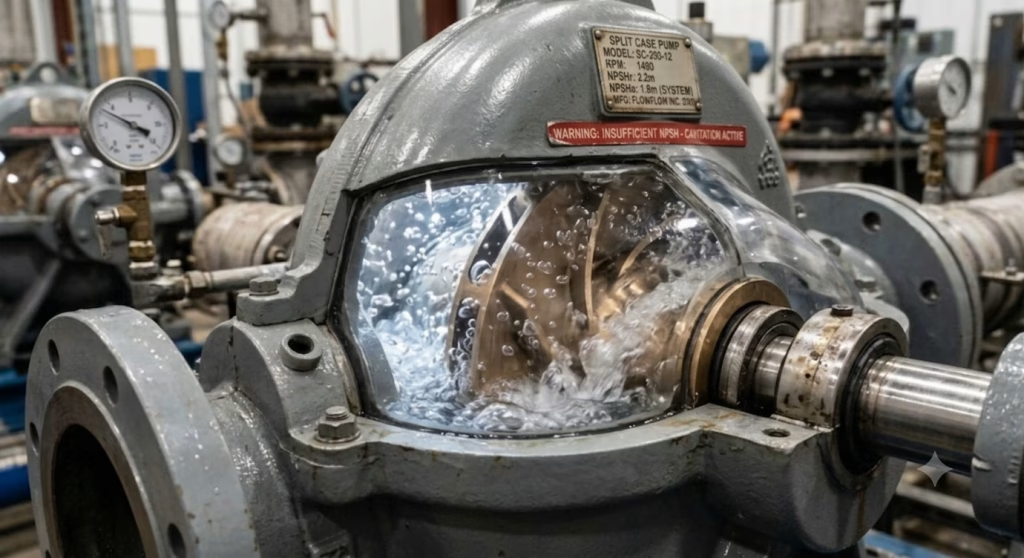
Figure 8: Left – Correct design (NPSHa > NPSHr). Right – Cavitation damage from insufficient NPSHa.
Need Help with NPSH Calculation for Your Project?
If you are selecting a split case pump for water supply, cooling systems, or industrial applications, our engineers can verify your NPSHa and recommend the right pump.
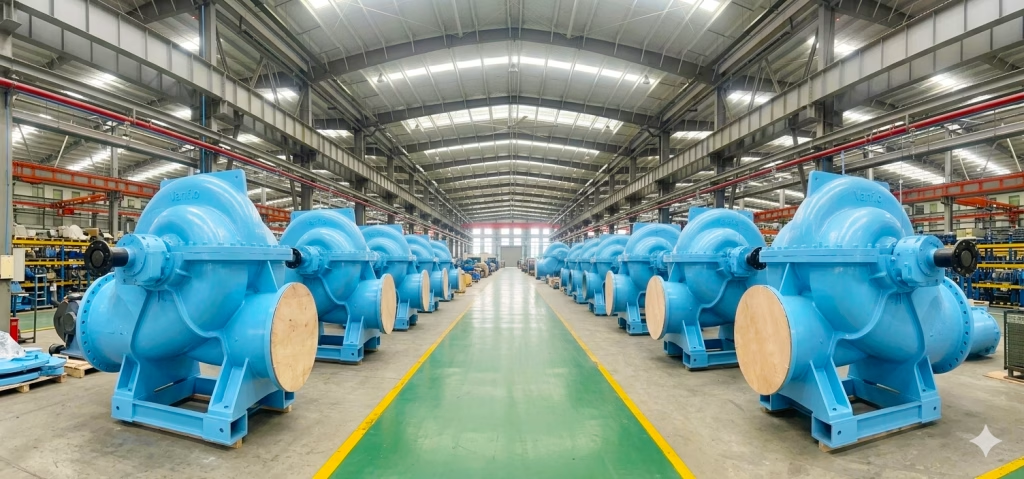
Contact Durafort Pumps – We provide free NPSH verification with every pump quotation.
- 🌐 https://deyangforge.com
- 📧 sales@deyangforge.com