Ever wonder what makes a horizontal split case pump the preferred choice for moving massive volumes of water reliably and efficiently? Whether you are designing a new municipal water system, upgrading a power plant’s cooling circuit, or specifying pumps for a major industrial project, understanding the internal workings of this workhorse is essential. This article provides a comprehensive breakdown of the horizontal split case pump diagram and explains its working principle in detail.
What is a Horizontal Split Case Pump?
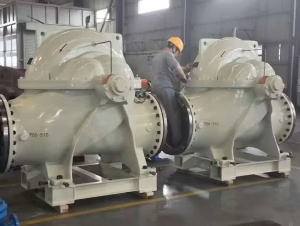
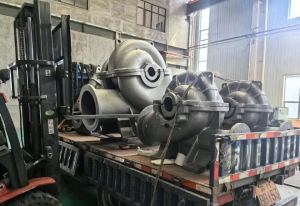
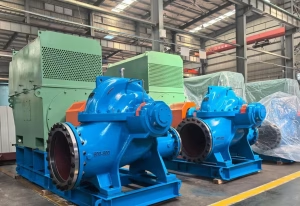
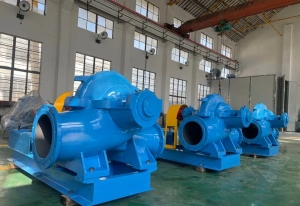
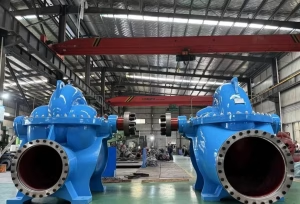
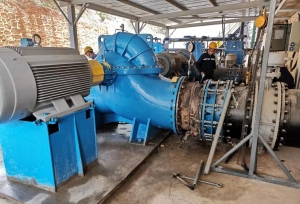
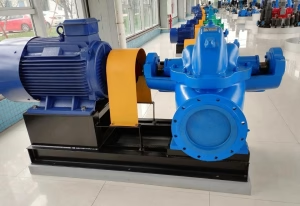
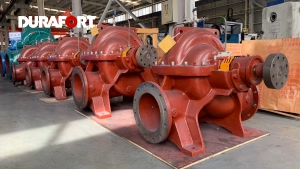
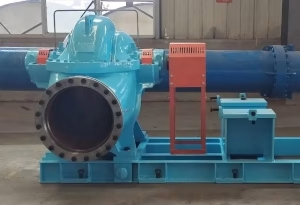
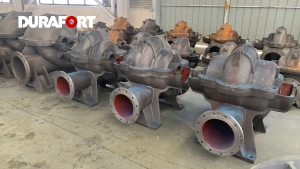
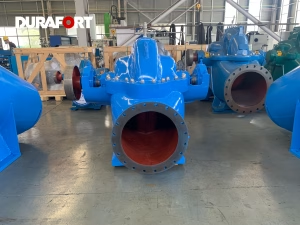
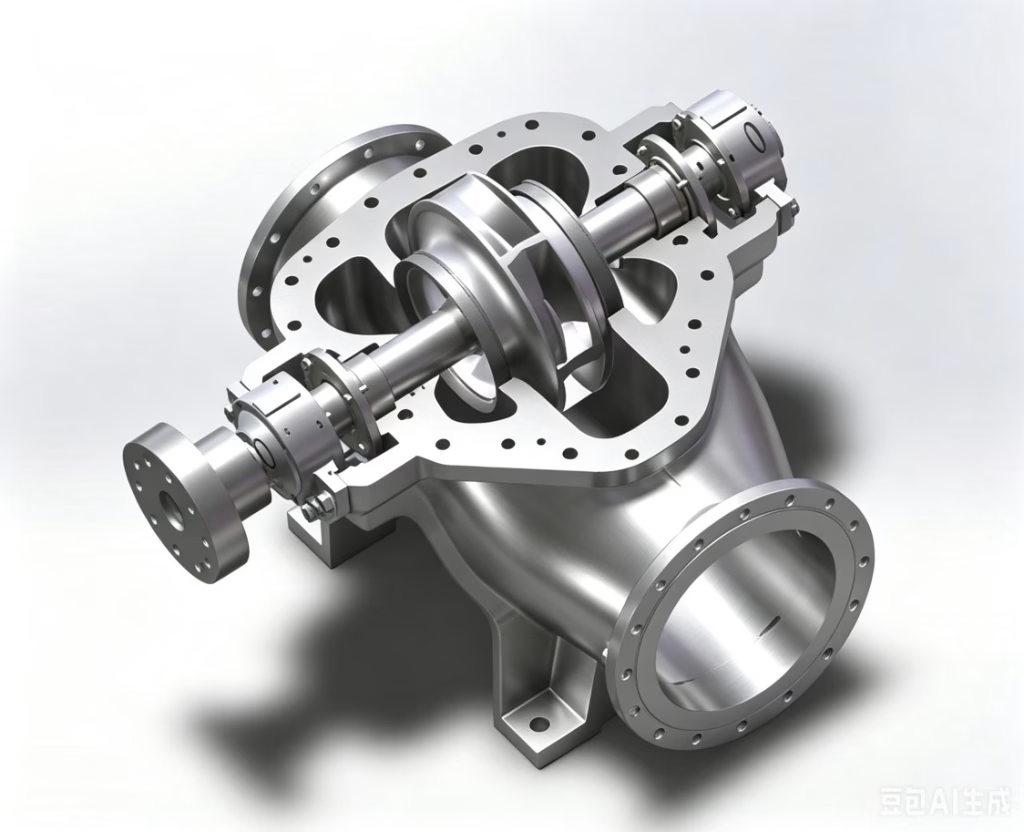
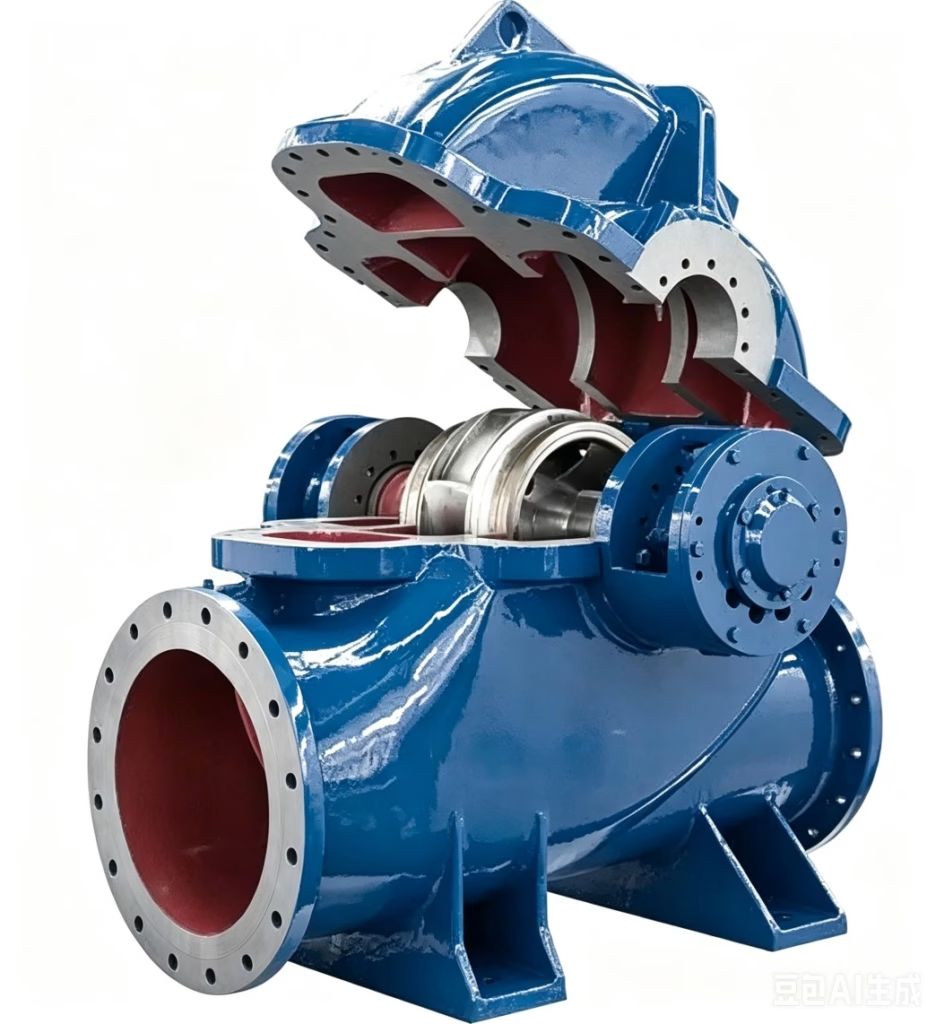
A horizontal split case pump is a type of centrifugal pump characterized by its casing, which is divided into two halves along the horizontal centerline of the shaft . This “split” design, combined with a double-suction impeller, makes it ideal for high-flow, continuous-duty applications in industries ranging from municipal water and power generation to marine and HVAC .
Core Characteristics
- Horizontal Shaft Orientation: The pump shaft is positioned horizontally .
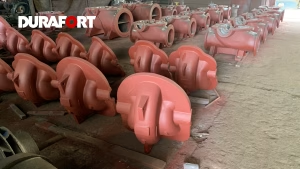
- Horizontally Split Casing: The casing is split along the shaft’s centerline into an upper and lower half .
- Double-Suction Impeller: The impeller is designed to allow liquid to enter from both sides simultaneously .
- Between-Bearings Design: The impeller is supported by bearings on both the drive and non-drive ends, ensuring stability and reducing shaft deflection .
Horizontal Split Case Pump Diagram: Anatomy of a Pump
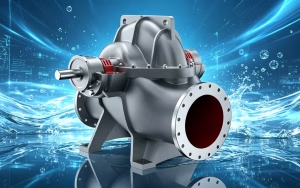
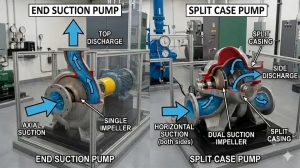
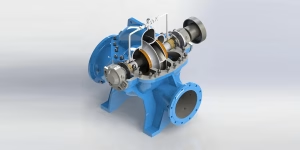
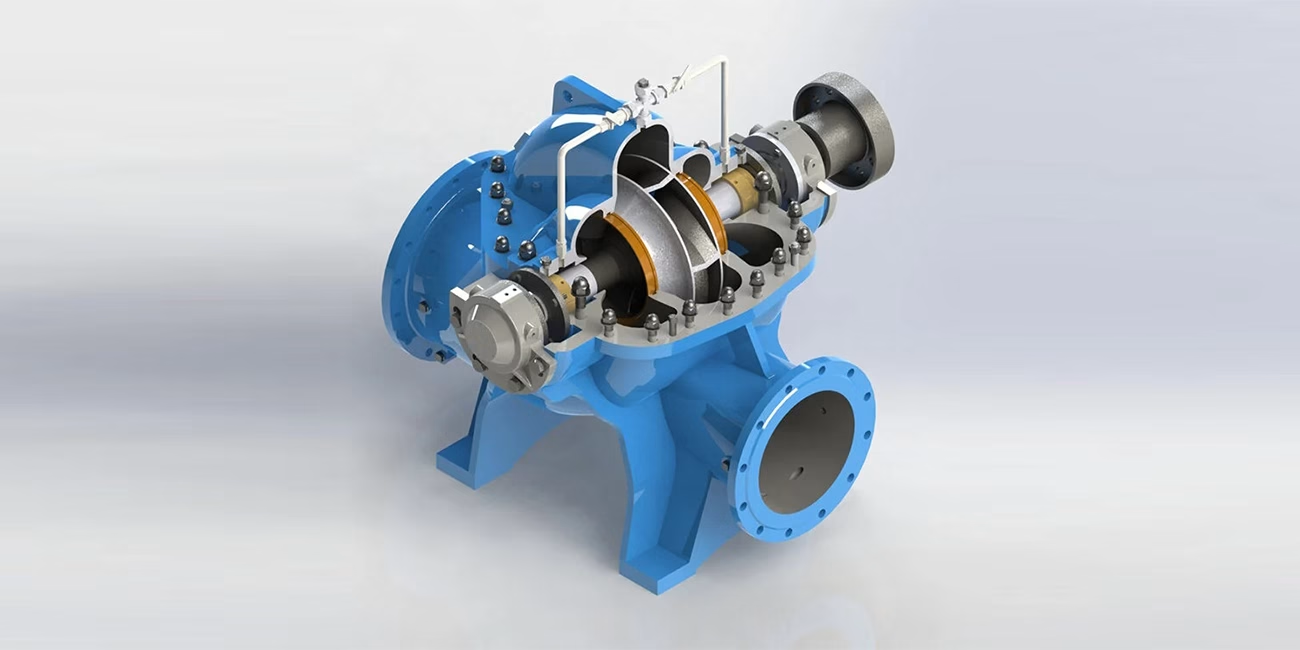
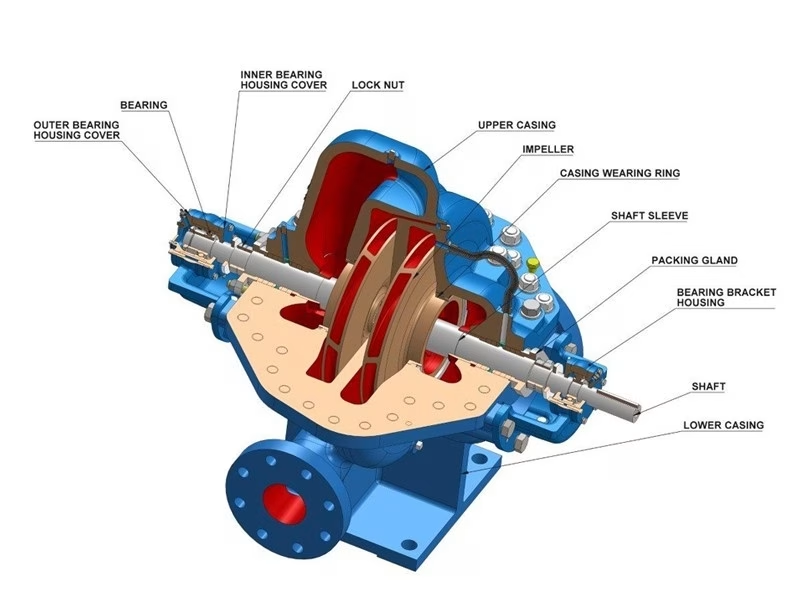
To understand how a horizontal split case pump works, it’s helpful to first visualize its key components. The following diagram and breakdown illustrate the primary parts, which is essentially the “horizontal split case pump diagram” you need to know.
Key Components
- Pump Casing (Upper and Lower Halves): The main outer housing, split horizontally. The lower half contains the suction and discharge flanges, allowing the upper half to be removed for maintenance without disturbing the piping .
- Impeller: A double-suction, enclosed impeller that draws fluid from both sides. This design hydraulically balances axial thrust, reduces bearing loads, and minimizes vibration .
- Pump Shaft: Transmits rotational torque from the motor to the impeller. It is supported by bearings on both ends .
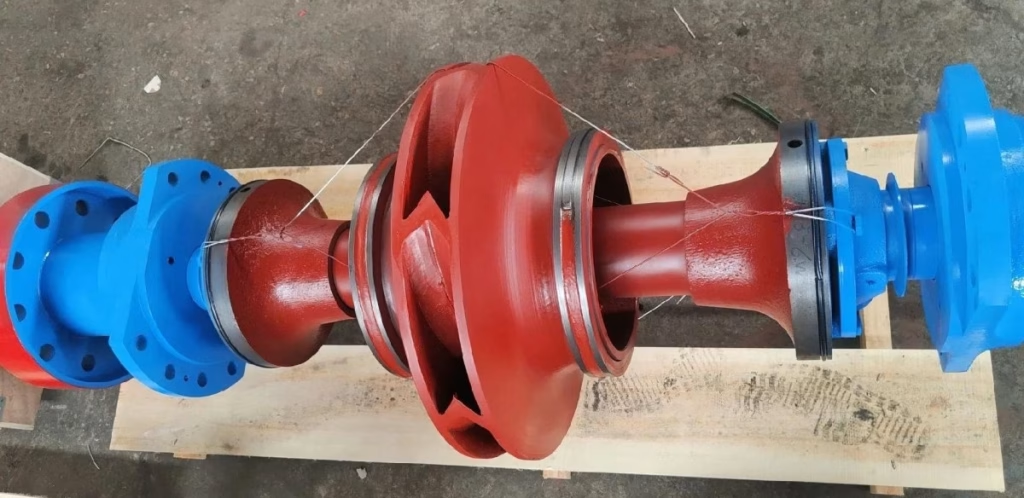
- Bearings: Support the shaft and rotor assembly, ensuring smooth, low-vibration rotation. The “between-bearings” design is a hallmark of this pump type .
- Sealing System (Mechanical Seal or Packing): Prevents the pumped liquid from leaking along the shaft. This can be in the form of packing (with a lantern ring for cooling) or a mechanical seal .
- Wearing Rings: Replaceable rings that reduce internal leakage from the discharge side back to the suction side, maintaining pump efficiency .
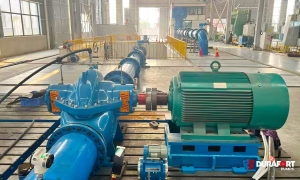
- Coupling: Connects the pump shaft to the motor shaft to transmit power .
Working Principle of a Horizontal Split Case Pump
The horizontal split case pump operates on the fundamental principle of a centrifugal pump: converting mechanical (rotational) energy into hydraulic (pressure) energy using centrifugal force .
Step-by-Step Process
1. Priming:
Before startup, the pump casing must be completely filled with the liquid to be pumped. Unlike self-priming pumps, standard split case pumps cannot operate if filled with air .
2. Liquid Suction:
Once the motor is started, the shaft drives the impeller to rotate at high speed. The impeller blades impart a centrifugal force on the liquid inside the impeller, throwing it outward from the eye (center) to the periphery . This action creates a low-pressure zone at the impeller eye. The higher atmospheric pressure on the liquid source forces liquid through the suction pipe and into the impeller from both sides simultaneously .
3. Energy Conversion:
The high-speed liquid exits the impeller with high kinetic energy and flows into the volute casing. The volute has a gradually increasing cross-sectional area. As the fluid moves through this expanding passage, its velocity decreases. According to the principles of fluid dynamics, this decrease in velocity (kinetic energy) is converted into an increase in pressure (static pressure) .
4. Liquid Discharge:
The now-pressurized, high-energy liquid is directed out of the volute to the discharge flange and then into the system piping . This continuous cycle—suction, energy conversion, and discharge—happens as long as the impeller rotates, providing a steady flow of pressurized liquid.
Key Features and Advantages
- Easy Maintenance: The horizontal split design allows access to the impeller, bearings, and seals by simply removing the upper casing half. This eliminates the need to disconnect piping or move the motor .
- High Efficiency: Double-suction impellers offer superior hydraulic balance and efficiency, which can reach up to 93%, resulting in lower operational energy costs .
- Large Flow Capacity: The double suction design enables the pump to handle very high flow rates (up to 38,000 m³/h).
- Stable Operation: The balanced hydraulic forces and between-bearings support minimize vibration and ensure reliable, long-term operation .
- Versatility: Available in a wide range of materials, including carbon steel, stainless steel, and duplex alloys, to handle various fluids from clean water to corrosive chemicals. Customizations are available to replace pumps from other international manufacturers.
Conclusion
Understanding the horizontal split case pump diagram and working principle reveals why these robust pumps are the backbone of countless large-scale fluid handling operations. Their simple yet effective design, characterized by easy maintenance and high efficiency, makes them the go-to choice for engineers requiring reliable, high-volume pumping solutions. By mastering these core concepts, you can make more informed decisions regarding pump selection and maintenance for your specific application.
Ready to learn how our XSP Horizontal Split Case Pump can meet your specific requirements? Contact our experts today.